
Market Segmentation Consulting
Identify High-Value Customers, Clarify Unmet Needs, and Prioritize Growth Opportunities
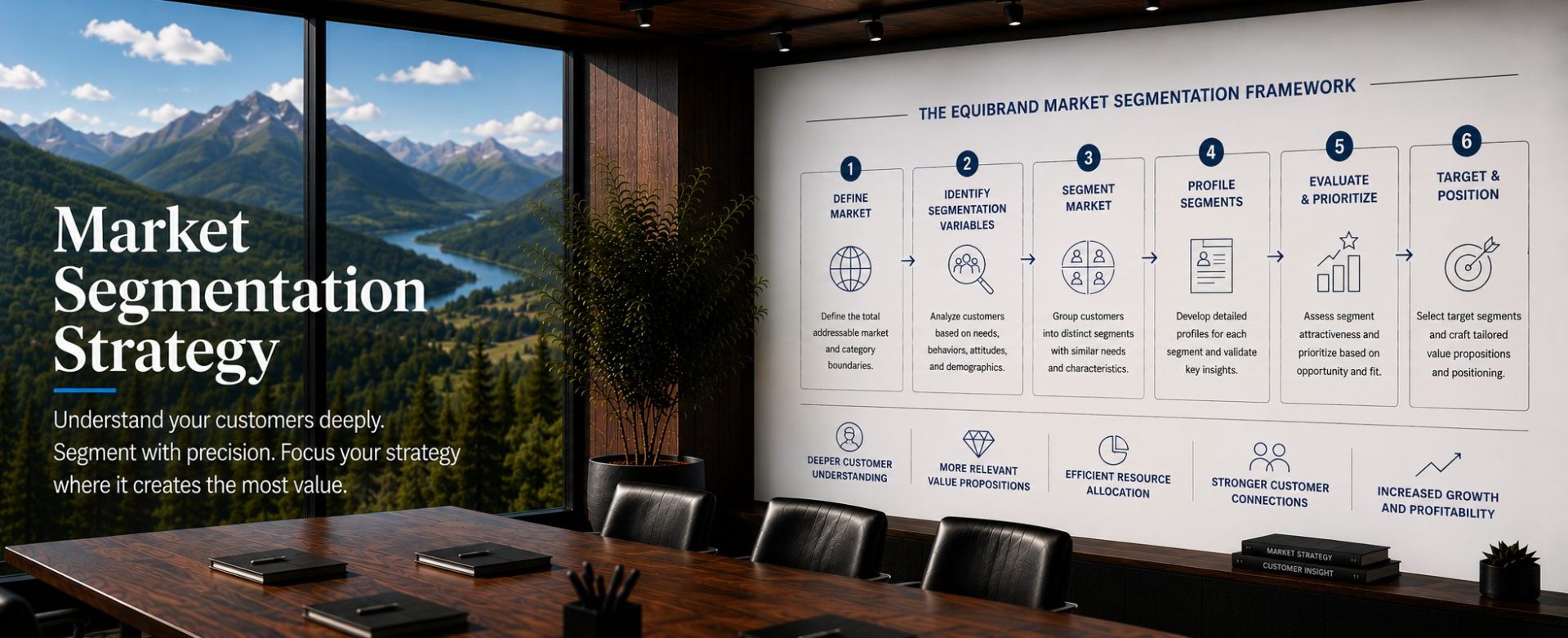
Segmentation is how EquiBrand helps organizations answer two foundational strategic questions: To Whom do we serve? For What do we serve them?
When segmentation is grounded in customer insight and strategically focused, it becomes the foundation for stronger positioning, clearer innovation priorities, and more effective resource allocation. When it’s vague or disconnected from strategy, organizations spread resources too broadly, pursue fragmented positioning, and struggle to compete effectively.
EquiBrand helps organizations develop segmentation that’s analytically rigorous, strategically actionable, and truly guides business decisions — not just sits in a report.
What We Help You Accomplish
When you work with EquiBrand on segmentation, we help you:
Identify and prioritize high-value customer groups. Which customer segments represent the greatest strategic opportunity? Which deserve focused resources? Which should you deliberately de-emphasize?
Clarify unmet customer needs and opportunities. What do different customer groups actually need? What problems do they face that your organization can solve? Where do meaningful gaps exist between customer needs and current solutions?
Define target customer criteria grounded in strategy. Segmentation isn’t just demographics. We help you define targets based on customer needs, buying behavior, decision criteria, and strategic fit — then prioritize which segments matter most.
Understand customer decision-making and buying behavior. How do customers in each segment evaluate alternatives? What drives their purchasing decisions? Which benefits matter most to which segments?
Align segmentation with Strategic Opportunity Areas (SOAs). Segmentation clarifies “To Whom?” and helps define which customer needs represent Strategic Opportunity Areas (where to compete). This alignment ensures positioning, innovation, and go-to-market strategy are all directed at the same target customers and customer needs.
Create segmentation that actually guides decisions. The test isn’t whether segments are statistically elegant. The test is whether they change the decisions your organization makes — about positioning, innovation, customer experience, and resource allocation.
Why Segmentation Initiatives Often Fail
Many organizations invest in segmentation but fail to create strategic impact. Common reasons include:
Relying too heavily on demographics. Organizations segment by age, income, geography — but demographics alone don’t explain why customers behave the way they do or what they actually value.
Disconnecting segmentation from strategy. Segments exist in isolation, not connected to positioning, innovation, or go-to-market decisions. Leadership doesn’t use segments to guide actual choices.
Creating segments that are too academic. Segments are statistically precise but not actionable. Teams can’t articulate which segment they’re targeting or why.
Not operationalizing segmentation internally. Segments aren’t communicated across the organization. Sales teams don’t know who to target. Marketing messages aren’t tailored. Teams continue operating as before.
Lacking executive alignment. Leadership disagrees on which segments matter. Different teams target different customer groups. The organization lacks a unified view of which customers are worth serving.
Focusing on breadth instead of focus. Too many segments. No clear prioritization. The organization tries to be all things to all people rather than making hard choices about who matters most.
How EquiBrand Ensures Segmentation Succeeds
We approach segmentation with disciplined rigor and strategic focus:
Grounding in customer insight, not just demographics. We conduct qualitative and quantitative customer research to understand needs, motivations, decision-making behavior, and buying criteria — not just demographic categories.
Defining segments around customer needs and benefits. We segment based on what customers actually value, how they make decisions, and what problems they’re trying to solve — creating segments that are meaningful and differentiating.
Connecting segmentation to strategic decisions. We ensure segments directly inform positioning, value proposition, innovation priorities, and go-to-market strategy. Segmentation becomes the lens through which strategic choices are made.
Making segmentation actionable and clear. Segments are documented in ways that teams can actually use — clear descriptions, decision criteria, target customer profiles that guide how you market, sell, and serve.
Creating alignment across leadership. We facilitate conversations that align leadership around target customers, strategic priorities, and investment decisions. Ambiguity gets resolved early.
Operationalizing across the organization. Segmentation isn’t handed off to sales and marketing after completion. We help communicate strategy, integrate segments into decision-making processes, and ensure they guide ongoing choices.
Segmentation for Different Market Types
Needs-Based Segmentation
Traditional demographic segmentation alone often fails to explain customer behavior. Needs-based segmentation examines unmet customer needs, motivations, purchase drivers, usage situations, and desired outcomes.
This approach creates stronger strategic direction for positioning, innovation, and customer experience — because it reflects how customers actually make decisions.
We help organizations move beyond “who are they?” to “what do they need and why?” This deeper understanding creates segments that are truly meaningful and strategically differentiating.
B2B Market Segmentation
B2B buying involves multiple stakeholders with competing priorities — economic buyers, technical evaluators, operational users, procurement stakeholders, executive leadership, and often channel partners.
EquiBrand helps B2B organizations:
- Map stakeholder roles and influence. Who participates in decisions? What role does each play?
- Understand stakeholder-specific needs. Different stakeholders value different things. Technical buyers care about performance. Procurement cares about cost. Users care about ease of use.
- Identify decision drivers across stakeholders. What drives adoption? What drives satisfaction? How do different stakeholders evaluate alternatives?
- Segment around buying dynamics, not just company size. Segment by decision complexity, organizational structure, purchase criteria — not just industry or revenue.
- Position and message for different stakeholders. Value propositions and messaging should reflect what each stakeholder actually cares about.
This is particularly critical in complex industries such as healthcare, medical devices, enterprise technology, and professional services — where stakeholder complexity makes segmentation both more challenging and more strategically valuable.
Start With Strategic Clarity
If your organization needs segmentation that actually guides strategic decisions, the Upstream Strategy Diagnostic can help.
We evaluate:
- Which customer groups represent the greatest strategic opportunity?
- What are the genuine customer needs in each segment?
- Where are meaningful gaps between customer needs and your current offerings?
- Which segments should receive focused resources?
- How should segmentation inform positioning, innovation, and go-to-market strategy?
Typically completed in 4–6 weeks.
→ Start Your Upstream Strategy Diagnostic
How This Connects to Your Strategic System
Segmentation is most powerful when connected to broader upstream decisions about where you compete and how you differentiate.
Strategic Opportunity Areas (SOAs)
Segmentation answers “To Whom?” and helps define “For What?” The intersection creates your Strategic Opportunity Areas — the fishing ponds where you compete. Clear segmentation is foundational to clear SOAs.
→ Explore Strategic Opportunity Areas
Customer Insights & Analytics
Segmentation is built on deep customer insight. We combine research, analysis, and strategic thinking to develop segments grounded in how customers actually behave and decide.
→ Explore Customer Insights & Analytics
Value Proposition & Positioning
Once you’ve segmented clearly, value proposition and positioning reflect what each target segment actually values. Different segments may need different messaging or positioning emphasis.
Brand Strategy & Portfolio
Segmentation clarifies which customer groups should be served by which brands and offerings. It informs brand architecture and portfolio decisions.
Innovation Strategy
Clear segmentation reveals unmet needs that represent innovation opportunities. It guides where innovation resources should be focused and which customer problems are worth solving.
→ Explore Growth & Innovation Strategy
Strategic Integration
Segmentation works best when integrated with brand strategy and innovation strategy — ensuring customer insight informs all three.
→ Explore Strategic Integration
When Organizations Engage EquiBrand for Segmentation
Organizations typically work with us when:
- Customer understanding is incomplete, outdated, or fragmented
- Growth opportunities are unclear or difficult to prioritize
- Positioning is diluted because target customers are too broad
- Different teams are targeting different customers without alignment
- Value propositions aren’t resonating because they’re not tailored to actual customer needs
- Portfolio or product decisions lack a clear customer foundation
- Leadership teams disagree about which customers matter most
- Strategy decisions need stronger customer insight before commitment
- Existing segmentation isn’t actually guiding business decisions
Our Approach
We combine strategic thinking, customer research, analytical rigor, and commercialization experience to develop segmentation frameworks that organizations actually use.
Our process typically includes:
- Executive stakeholder interviews to understand current thinking and strategy
- Qualitative customer research (interviews, focus groups) to uncover customer motivations, needs, and decision-making
- Quantitative analysis to size segments, validate hypotheses, and prioritize opportunities
- Needs-based segmentation development grounded in how customers actually decide
- Customer journey mapping to understand decision processes and stakeholder dynamics
- Segment profiling and targeting frameworks that guide positioning, innovation, and go-to-market strategy
- Stakeholder workshops to build alignment around target customers and strategic priorities
- Integration with positioning, value proposition, and innovation strategy
The result isn’t a report that sits on a shelf. It’s a working framework that guides strategic and commercial decisions across the organization.
Related Capabilities
- Customer Insights & Analytics — Understand customer needs and motivations
- Strategic Opportunity Areas — Define where you compete (To Whom / For What)
- Portfolio Strategy — Align offerings with target customers
- Value Proposition — Define value for each target segment
- Brand Positioning — Position for your target customers
- Brand Strategy — Structure brands around customer segments
- Growth & Innovation Strategy — Innovate for identified customer needs
- Strategic Integration — Ensure customer insight guides all strategic decisions





Follow EquiBrand