
What Disney Teaches About Innovation Strategy
A Case Study in Where to Play, How to Win, and Upstream Marketing
Most companies think innovation means creating something new.
Disney approaches innovation differently.
At Disney, innovation is not random creativity or disconnected brainstorming. It is a disciplined process of understanding customer needs, identifying strategic gaps, aligning experiences with the Disney brand, and testing ideas until they work operationally and emotionally.
That distinction matters.
While competitors often chase bigger features, faster technology, or short-term trends, Disney has historically focused on a deeper question:
How do we create emotionally immersive experiences people will remember for life?
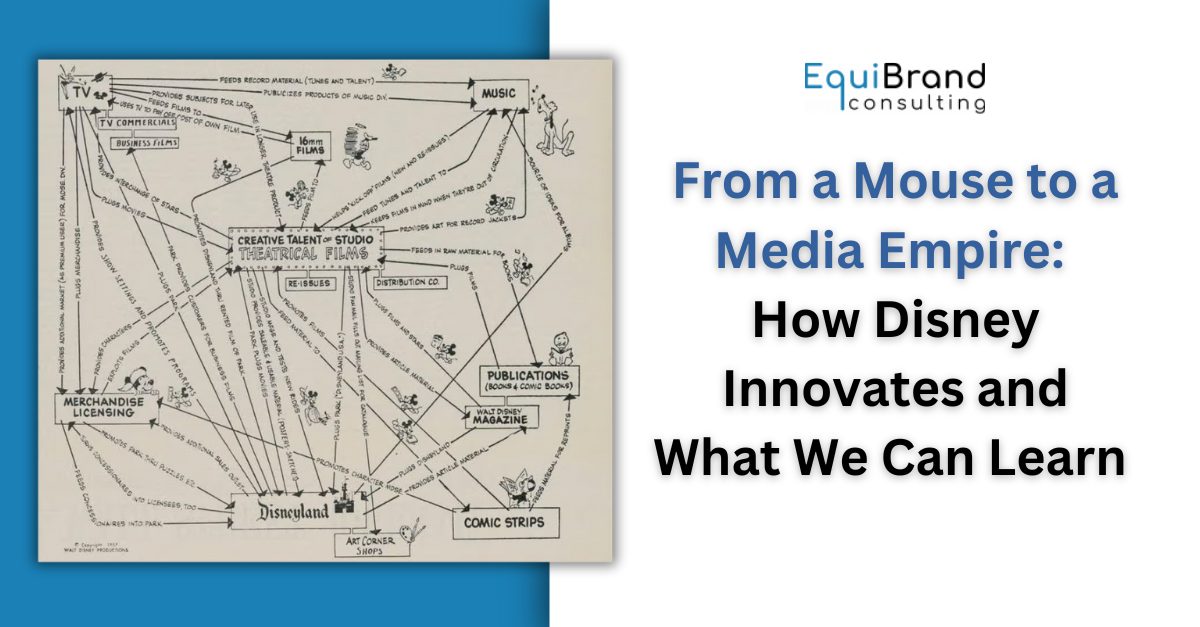
That upstream orientation has allowed Disney to expand from animation into theme parks, resorts, cruises, streaming, consumer products, experiential entertainment, and global franchises while maintaining a remarkably coherent brand identity.
Disney is not simply in the entertainment business.
It is in the emotional experience business.
And that insight helps explain why Disney has remained one of the world’s strongest brands for generations.
The Upstream Marketing Lens
The Disney story becomes especially interesting when viewed through the Upstream Marketing framework:
-
Where to Play
-
How to Win
-
How Might We?
-
What Would Have to Be True?
Rather than treating innovation as isolated invention, Disney consistently aligns customer insight, strategic positioning, experience design, and operational execution.
That alignment is the real competitive advantage.
Where to Play
Identifying Strategic Gaps Before Competitors Do
One of the most important upstream decisions is determining where growth should come from.
Disney has repeatedly used segmentation and customer insight to identify underserved audiences and portfolio gaps before developing new offerings.
Within Disney Parks, for example, the company recognized opportunities to expand beyond its traditional young-family audience into additional customer segments.
For thrill-seeking teens, Disney introduced attractions such as Tower of Terror, Guardians of the Galaxy, and Star Wars experiences. For experience-focused travelers, Disney expanded into cruise lines. For adults seeking relaxation-oriented experiences, Disney developed golf resorts and Downtown Disney concepts. For corporate audiences, the company expanded into convention hotels and Disney Institute programs.
This is a classic “where to play” decision.
Disney was not simply asking:
“What ride should we build next?”
Instead, the company asked:
“Which audiences are underserved, and what experiences would align with the Disney brand while meeting their needs?”
That is upstream thinking.
Competing Without Abandoning the Brand
Disney’s response to Universal Studios in the 1990s illustrates the difference between reactive competition and strategic innovation.
Universal attracted teens with larger thrill rides and roller coasters. Disney could have responded by simply building a faster or more extreme coaster.
But doing so would have conflicted with the broader Disney identity built around immersive storytelling and magical experiences.
Instead, Disney chose a different path.
Tower of Terror combined thrills with storytelling, atmosphere, characters, and thematic immersion. Later, Disney expanded teen appeal further through Marvel and Star Wars integrations.
Disney did not merely chase the category trend.
It adapted the opportunity to fit the Disney experience system.
That distinction is critical.
How to Win
Building an Emotionally Integrated Experience System
Many companies compete on features.
Disney competes on emotional orchestration.
The company’s advantage is not any individual attraction, hotel, film, or product. Its real advantage comes from how everything reinforces everything else.
Disney integrates:
-
storytelling
-
characters
-
physical environments
-
operations
-
music
-
service
-
nostalgia
-
emotional memory creation
into one coherent customer experience system.
This is why Disney Parks are not simply amusement parks.
They are immersive environments designed to make guests feel like participants inside the story itself.
That emotional immersion is the “how to win” strategy.
The Disney Difference
Innovation Through Experience Design
Disney also understands something many organizations miss:
People rarely buy experiences for purely functional reasons.
Families are not simply buying rides.
They are buying:
-
shared memories
-
emotional connection
-
escape
-
wonder
-
imagination
-
nostalgia
Disney’s innovation strategy therefore extends beyond product features into experience architecture.
That is upstream marketing in practice.
How Might We?
Disney’s Innovation Process
Disney’s innovation culture also reveals an important strategic principle:
Innovation should be exploratory before it becomes operational.
The company famously embraced a process described internally as:
-
the dreamer
-
the realist
-
the spoiler
According to Disney animator Ollie Johnston:
“There were actually three different Walts: the dreamer, the realist, and the spoiler.”
This framework remains remarkably relevant today.
The Dreamer
The dreamer generates ideas without judgment or constraints.
This stage encourages:
-
imagination
-
blue-sky thinking
-
conceptual exploration
-
creative possibility
Importantly, Disney recognized that weak ideas can evolve into strong ideas through iteration.
The Realist
The realist asks:
“How might we execute this vision?”
Here, ideas become:
-
prototypes
-
experiences
-
testable concepts
-
operational systems
This stage bridges creativity and feasibility.
The Spoiler
Finally, the spoiler challenges assumptions.
The key question becomes:
“What would have to be true for this to succeed?”
This stage introduces:
-
realism
-
constraints
-
operational testing
-
strategic risk analysis
Rather than killing innovation, this process strengthens it.
What Would Have to Be True?
The Hidden Discipline Behind Innovation
This may be the most overlooked part of innovation strategy.
Many organizations generate ideas.
Far fewer rigorously examine assumptions.
Disney’s approach implicitly asks:
-
Would guests actually value this experience?
-
Does it align with the Disney brand?
-
Can it scale operationally?
-
Can it remain immersive at high attendance levels?
-
Can the economics support the investment?
-
Will it strengthen or dilute emotional connection?
These are upstream strategic questions.
And they often determine whether innovation succeeds long before execution begins.
The Bigger Strategic Lesson
Disney demonstrates that strong innovation rarely comes from disconnected brainstorming alone.
It emerges when:
-
customer insight
-
strategic positioning
-
segmentation
-
storytelling
-
operational execution
-
experience design
work together as one integrated system.
That is why Disney has been able to extend successfully across:
-
parks
-
cruises
-
streaming
-
resorts
-
merchandise
-
entertainment franchises
-
destination experiences
while maintaining a coherent brand identity.
Lessons Business Leaders Can Learn From Disney
1. Innovation Starts With Customer Insight
Disney focuses deeply on emotional outcomes, not simply features or technology.
2. Strong Brands Innovate Within Strategic Boundaries
Disney adapts without abandoning its core identity.
3. Experiences Matter More Than Features
Customers remember emotional experiences long after functional details fade.
4. Segmentation Helps Identify Growth Opportunities
Disney uses “where to play” thinking to identify underserved audiences and portfolio gaps.
5. Great Innovation Requires Both Creativity and Discipline
The dreamer, realist, and spoiler framework balances imagination with execution reality.
6. Operational Systems Must Reinforce Positioning
Disney’s storytelling is embedded operationally, not just communicated through advertising.
Final Thought
Disney’s long-term success was not built through downstream marketing execution alone.
It was built upstream:
through customer understanding, strategic clarity, segmentation discipline, experience design, and coherent innovation systems.
That is the deeper lesson.
Strong brands do not simply market experiences well.
They strategically design experiences worth marketing in the first place.
Strong growth rarely begins with downstream execution alone. It begins with upstream strategic clarity.








Follow EquiBrand