
Chapter 7: Aim ‘Em, Don’t Tame ‘Em (Creativity & Culture)
From Upstream Marketing: Unlock Growth Using the Combined Principles of Insight, Identity, and Innovation by Tim Koelzer and Kristin Kurth (Greenleaf Book Group Press, 2021)
Chapter summary. Chapter 7 is the second best practice of the innovation principle and the social side of upstream marketing. The best innovation strategy and process won’t matter without a culture to drive it, and that culture has to hold a paradox: aim people and ideas strategically without taming the creativity that makes them valuable. The chapter profiles the cultures of Amazon, Nike, Southwest, Starbucks, and Disney, then distills five themes the innovators share: an aspirational identity, values that support innovation, the right people and mix of people, practices that embed innovation, and an organization committed to it.
Download the full chapter (PDF) | Download the chapter slides (PDF) | Get all nine chapters
“Does it have to be a light bulb?”
An inside joke at Disney asks how many Imagineers it takes to screw in a light bulb. The answer: does it have to be a light bulb? Best practice innovators are driven by facts, figures, and process discipline, but they also embrace creativity and challenge conventional thinking. The book argues that culture is what makes strategy and process work, and that the culture has to recognize the paradox of innovation at three levels:
- The organization: strategically aimed, but not so tamed that it loses agility.
- The people: Google’s “smart creatives,” who can’t be told how to think, so leaders manage the environment where they think.
- The values and behaviors that shape how people interact.
The paradox of innovative cultures
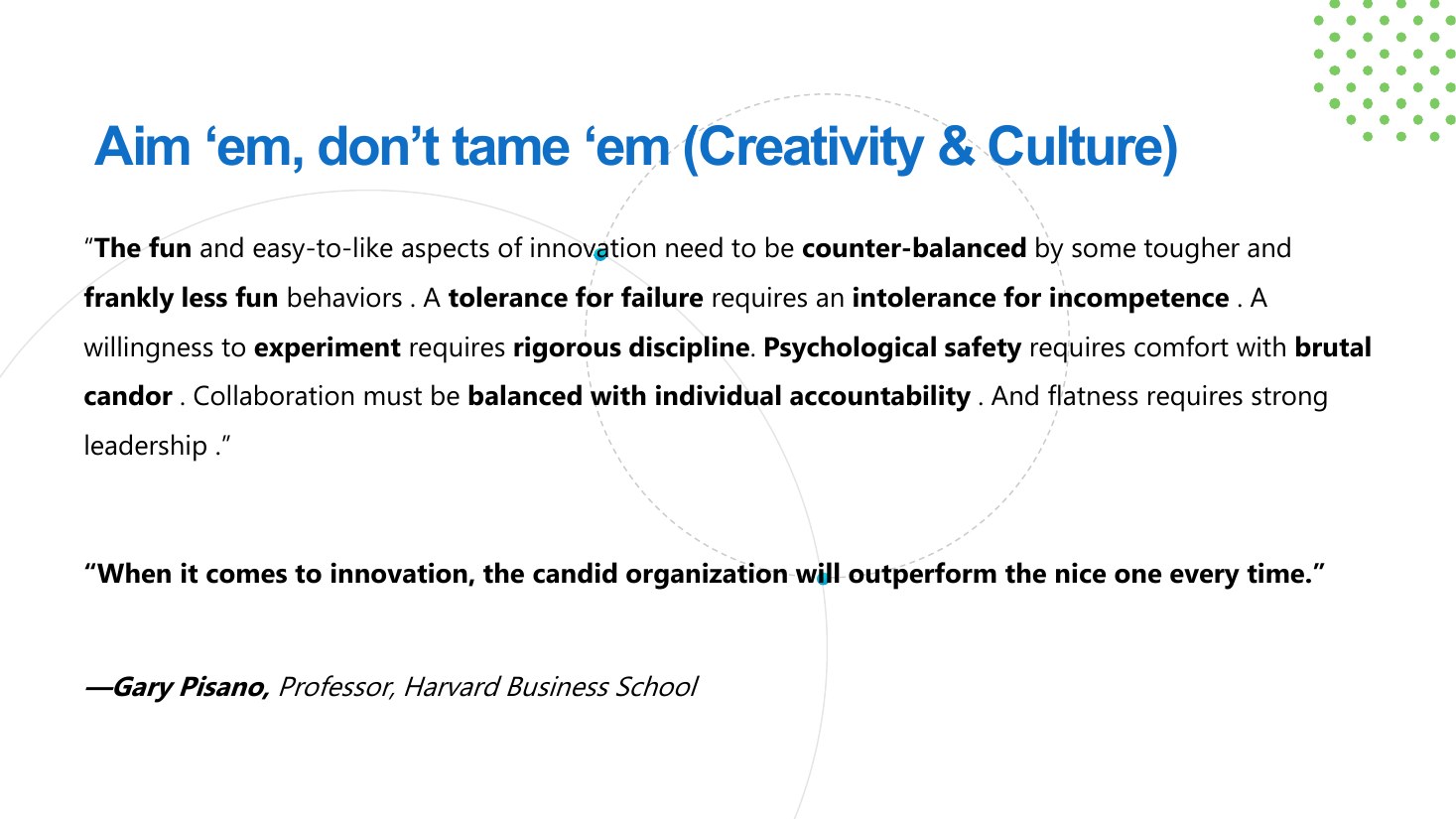
Harvard Business School professor Gary Pisano describes the hard truths behind the fun parts of innovation: tolerance for failure requires intolerance for incompetence; willingness to experiment requires rigorous discipline; psychological safety requires comfort with brutal candor; collaboration must be balanced with individual accountability; and flatness requires strong leadership. In his words, the candid organization will outperform the nice one every time.
Culture at the profile companies
Many companies pepper their statements with words like customer-centric, innovative, and creative. What separates real innovators isn’t a plaque on the wall; in EquiBrand’s experience, a values poster in the boardroom can be a red flag for an unengaged company. The chapter looks at how each profile company’s culture actually works:
- Amazon frames its values as leadership principles, from Customer Obsession and Invent and Simplify to Bias for Action, Frugality, and Have Backbone; Disagree and Commit. Its culture is performance-focused and customer-driven, and shows that values don’t need to be warm and fuzzy to work.
- Nike is the only profile company with innovation in its mission: to bring inspiration and innovation to every athlete in the world, where “if you have a body, you are an athlete.” Its culture is competitive and team-oriented, shaped by the athletes it serves.
- Southwest hires for values rather than skill (warrior spirit, servant’s heart, and a fun-LUVing attitude) and builds them into 360-degree reviews. Treat employees well, and they find creative ways to serve customers.
- Starbucks anchors culture in a mission to inspire and nurture the human spirit and values that end with “performance-driven, through the lens of humanity.” As Howard Schultz notes, turning a culture around is hard because it rests on many, many decisions.
- Disney shows how corporate statements can get watered down as companies grow: Walt’s “make people happy” became a long mission statement. Lower-level statements can carry the spirit instead.
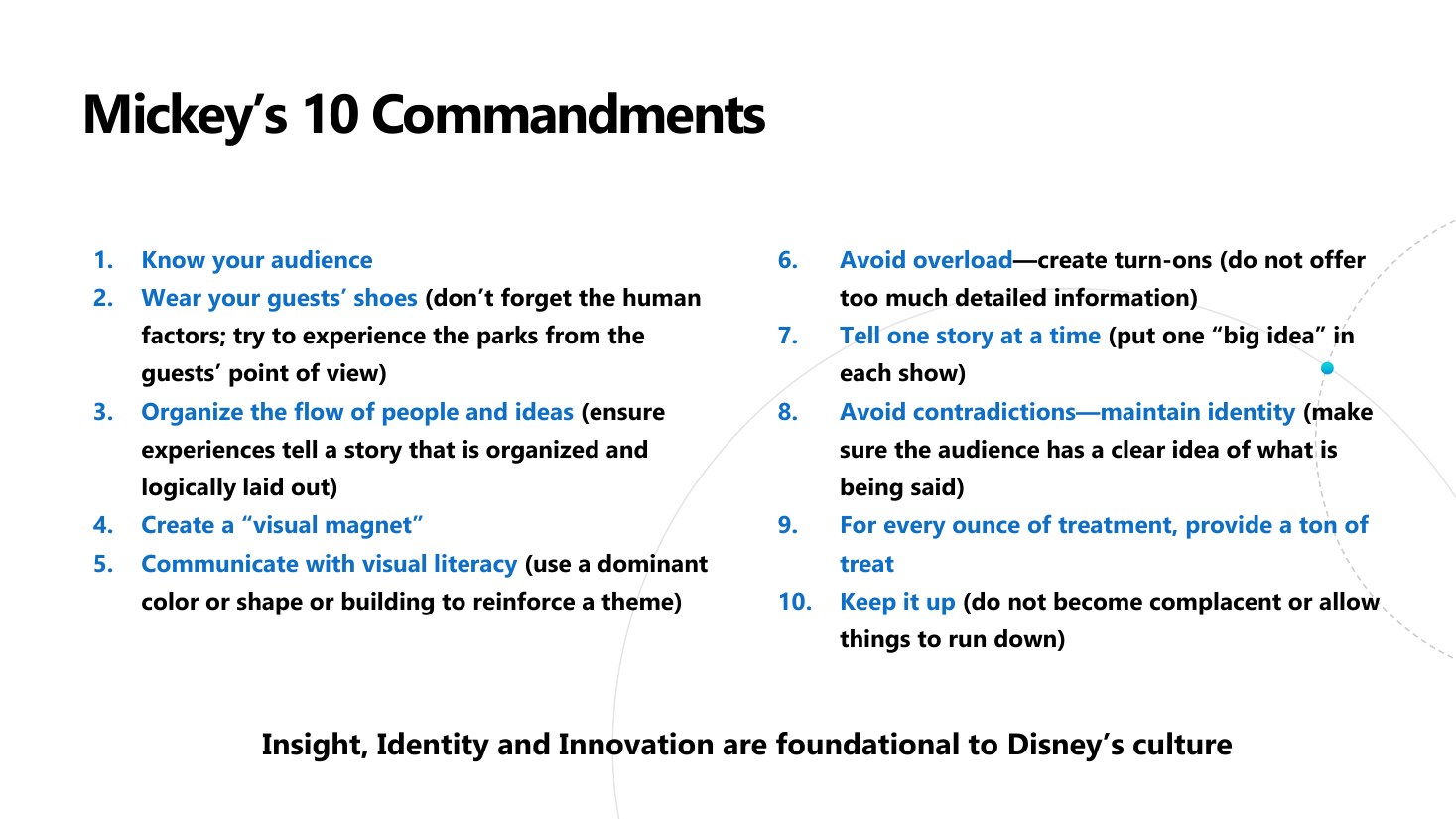
Disney Imagineering’s “Mickey’s Ten Commandments,” presented in 1991, read like upstream marketing: the first two (know your audience; wear your guests’ shoes) are insight, the middle ones (tell one story at a time; maintain identity) are identity, and the last (keep it up) is innovation.
Five common cultural themes
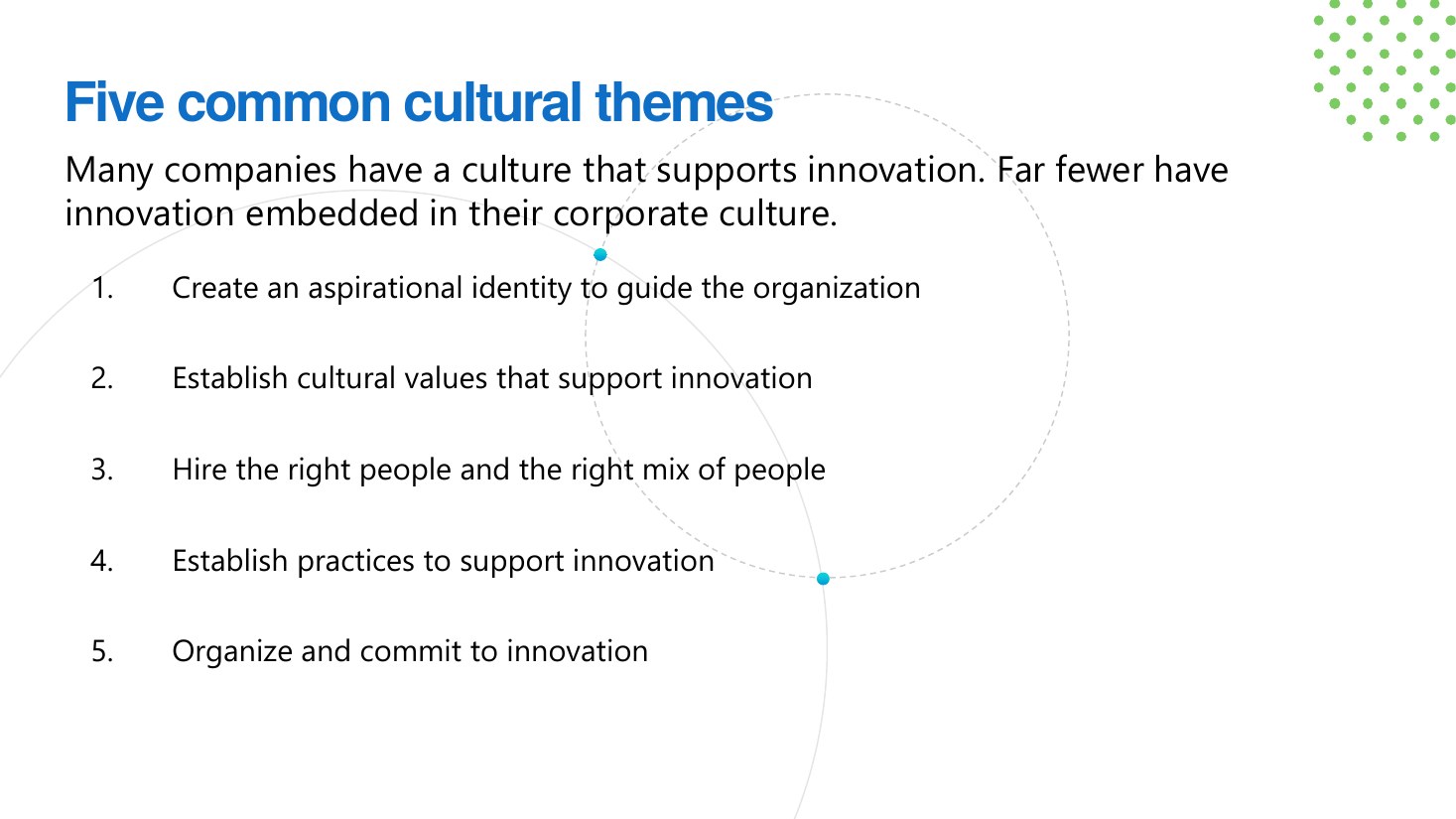
Many companies have a culture that supports innovation; far fewer have innovation embedded in their DNA. Across seven distinct cultures, the book finds five common themes.
1. Create an aspirational identity to guide the organization
Each profile company has an aspirational purpose and brand that focuses and stretches the organization. Amazon set out to be earth’s most customer-centric company; Google to organize the world’s information and make it universally accessible and usable. Leaders then have to communicate the purpose consistently and walk the talk.
2. Establish cultural values that support innovation
Values aren’t platitudes you can copy from another company; Amazon’s scream Amazon, and Nike’s elevate athleticism and competition. Despite the differences, the book identifies five values all the profile companies share:
- Focus on and obsess about the customer, not internal stakeholders, channel partners, or Wall Street.
- Employ a growth mindset. Two shoe salespeople visit a place where nobody wears shoes. One reports no market; the other reports a huge one.
- Think big, but start small and learn fast. “If you build it, they will come” is a wish, not a strategy. Experiment and let the customer be the tiebreaker.
- Ensure the best ideas win. Great ideas come from anywhere, often from newer people closer to the customer, yet many surface only in confidential interviews. Encourage people to challenge conventional thinking without fear.
- Recognize productive failures. Most new ventures don’t succeed; the real test of a culture is what happens when they fail. Jeff Bezos calls failure part and parcel of invention. Fail fast and learn.
3. Hire the right people and the right mix of people
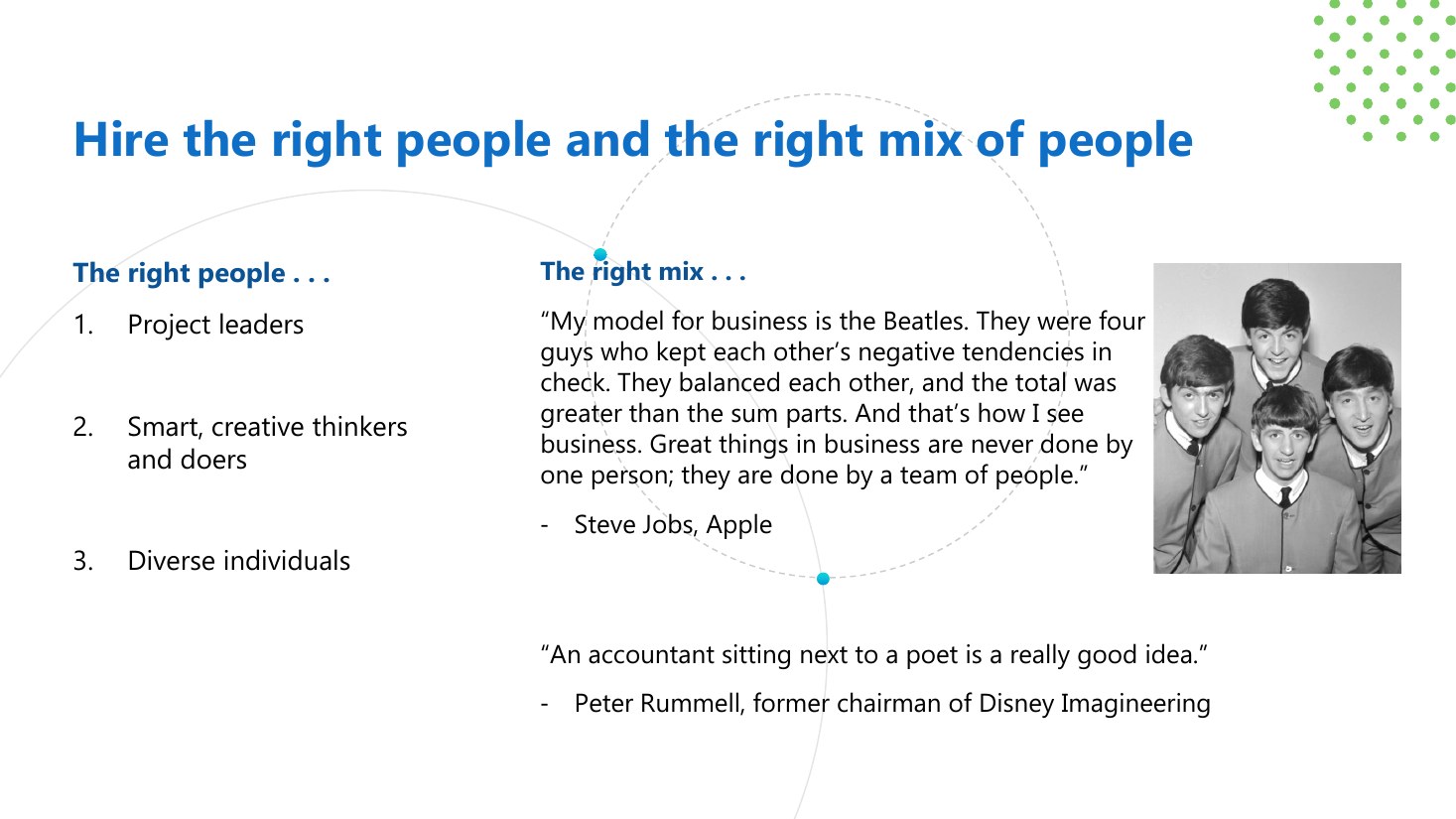
Innovation needs project leaders who drive cross-functional teams, smart creative thinkers and doers, and diverse individuals who solve problems from different viewpoints. Don’t avoid friction: friction creates sparks. “An accountant sitting next to a poet is a really good idea,” says former Disney Imagineering chairman Peter Rummell, and Steve Jobs’s model for business was the Beatles. Hire for attitude and train for skill, and appoint one accountable leader per team, because if everyone is accountable, no one is.
4. Establish practices to support innovation
Values matter only when they’re embedded in how a company operates. A company that says it’s customer-driven should invest in proprietary customer, marketplace, and technical insight. The chapter’s practices: communicate the growth strategy to the whole organization, run “idea finding” programs, codify and train on upstream marketing as a common language, and build people-based values into hiring, reviews, and promotions. The book notes that Apple, Google, Nike, and others hire fewer than 1 percent of applicants.
5. Organize for and commit to innovation
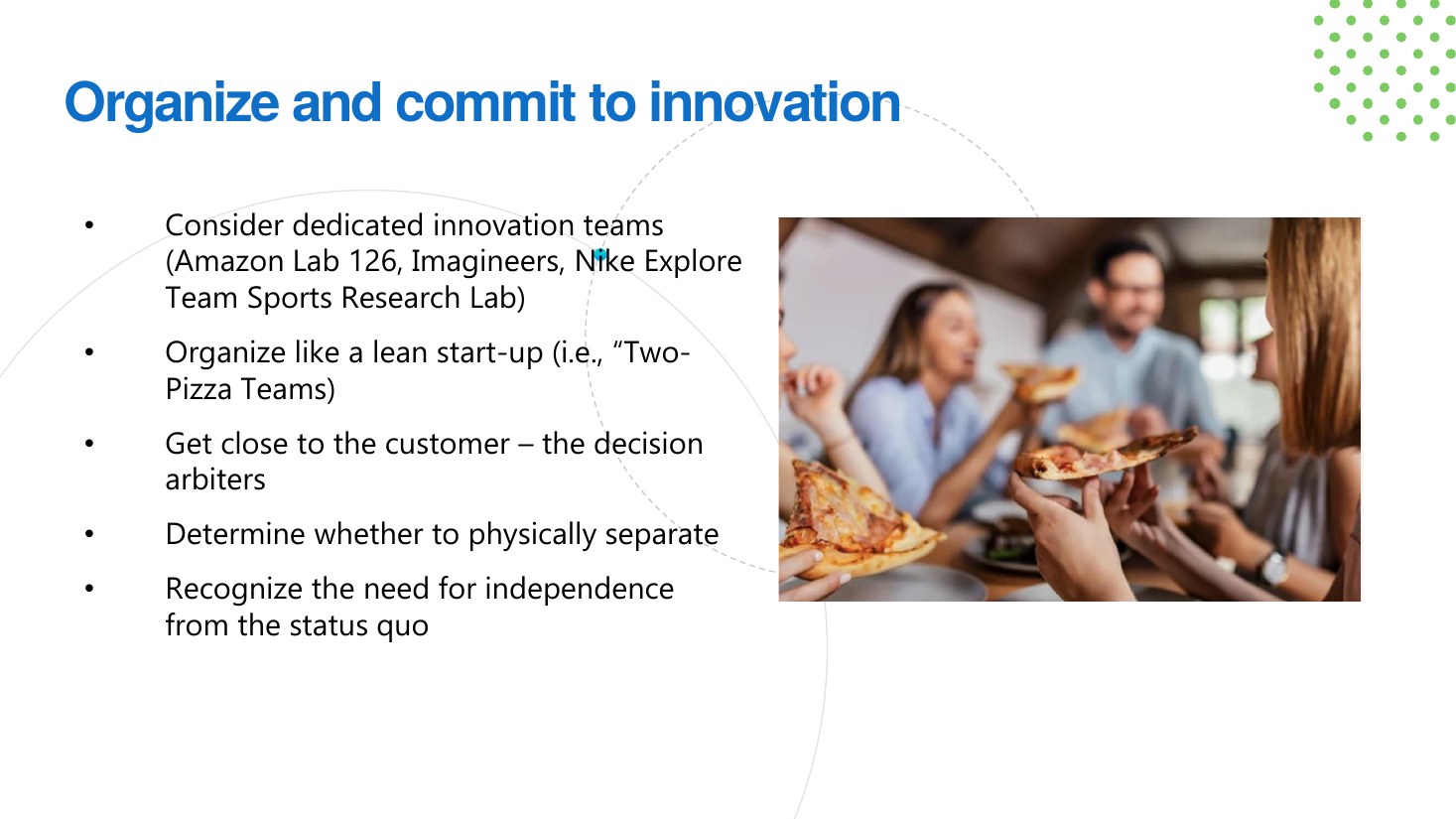
Innovation beyond the incremental needs resources freed from day-to-day firefighting. Consider a core organization alongside flexible, cross-functional innovation teams run like lean startups, such as Amazon’s “two-pizza teams,” with decisions in the hands of the people closest to customers. The profile companies run dedicated labs: Amazon Lab126, Disney Imagineering, Nike’s Sport Research Lab, Starbucks’ Tryer Innovation Center, and X at Google. Physical separation matters less than independence from the status quo and access to top leadership, and labs disconnected from the core business often fail. Fund innovation for its longer horizon, but remember Steve Jobs’s point: innovation isn’t about R&D dollars; it’s about the people, how they’re led, and how much they get it.
Key takeaway
Aim ’em, don’t tame ’em is the paradox of innovation culture. Companies need strategy and process, and an innovative mindset and culture that is less linear. To unlock growth, principles, practices, and culture all have to integrate into a common upstream marketing approach, the subject of Chapter 8.
Questions to consider
- Does the leadership team understand the paradoxical nature of innovation culture and the need to aim ’em, but not tame ’em, in driving growth?
- Are the values that support innovation embedded into the organization, and if not, what needs to change?
- Does the organization have the right practices and structure to facilitate innovation?
Put this chapter to work
- Innovation grounded in customers: Customer-driven innovation
- Getting the whole team generating ideas: Focused ideation
- A common language and process: EquiBrand’s strategic planning process
- Next step for leadership teams: Start the Growth Assessment
Frequently asked questions
What does “aim ’em, don’t tame ’em” mean?
It describes the paradox of innovation culture: aim people, teams, and ideas at clear strategic goals without taming the creativity, risk taking, and agility that make innovation possible.
What are the five common cultural themes of innovative companies?
Create an aspirational identity to guide the organization; establish cultural values that support innovation; hire the right people and the right mix of people; establish practices to support innovation; and organize for and commit to innovation.
What values do innovative companies share?
The book identifies five: obsess about the customer, employ a growth mindset, think big but start small and learn fast, ensure the best ideas win, and recognize productive failures.
Should innovation teams be separate from the core business?
Dedicated, lean, cross-functional teams help, but physical separation matters less than independence from the status quo, access to top leadership, and alignment with corporate strategy. Labs disconnected from the core business often fail.
Get all nine chapters
Want the whole framework? Enter your name and email and we’ll send you all nine chapters of Upstream Marketing, each with its slide deck, in one email.
"*" indicates required fields
← Chapter 6: Create, Test, and Learn | All chapters | Chapter 8: Upstream Marketing 7-Step Approach →





Follow EquiBrand