
Chapter 2: Maniacally Focus on the End Customer
From Upstream Marketing: Unlock Growth Using the Combined Principles of Insight, Identity, and Innovation by Tim Koelzer and Kristin Kurth (Greenleaf Book Group Press, 2021)
Chapter summary. Chapter 2 opens Part 1 of the book, the principle of insight. It defines insight as the step beyond knowledge and understanding: knowing why something happens and what to do about it. The chapter separates three types of insight (customer, marketplace, and technical), explains why market research on its own is not insight, and lays out a broad-to-narrow approach that moves from exploratory research to segmentation, concept iteration, and validation. It closes with seven practical tips, including how to build a benefit hierarchy and classify benefits, for leadership teams that want customer understanding their competitors don’t have.
Download the full chapter (PDF) | Download the chapter slides (PDF) | Get all nine chapters
Where this chapter fits
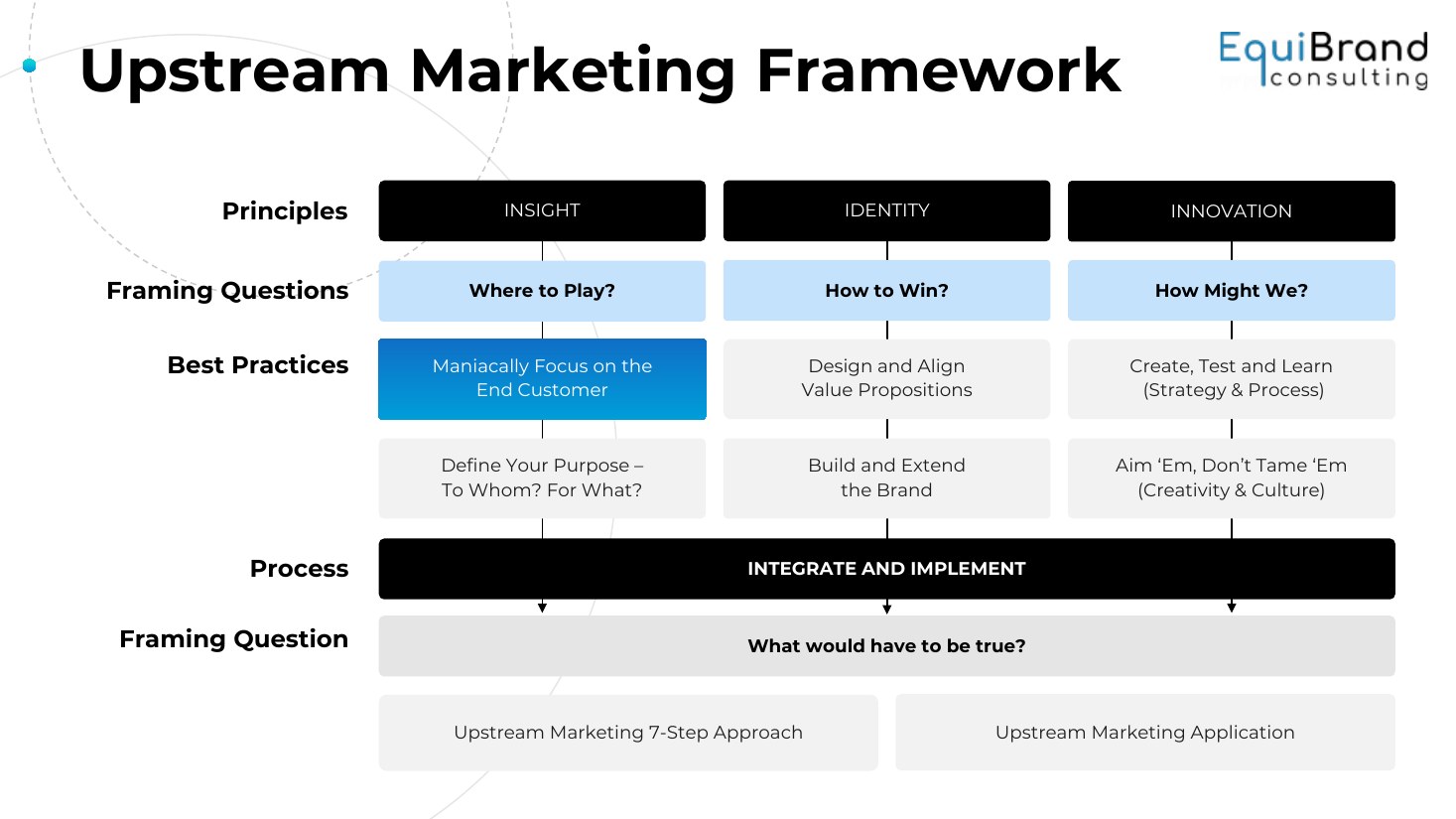
Upstream Marketing is organized around three principles: insight, identity, and innovation. Each principle has a framing question and two best practices. Insight answers where to play?, and its two practices are this chapter and Chapter 3, Define Your Purpose: To Whom? For What?
The book’s working definition of marketing is simple: meeting needs and wants profitably. You can’t meet needs you don’t understand, so insight comes first. Apple, Disney, and Google show the pattern. Apple flipped technology-driven categories to start from customer benefits. Walt Disney’s idea for Disneyland came from watching his daughters on a merry-go-round and wanting a park parents and children could enjoy together. Google kept its homepage simple while competitors built portals, because sending users onward with better-targeted ads was worth more. In each case, customer clarity led to a decision competitors didn’t make.
What insight is (and isn’t)
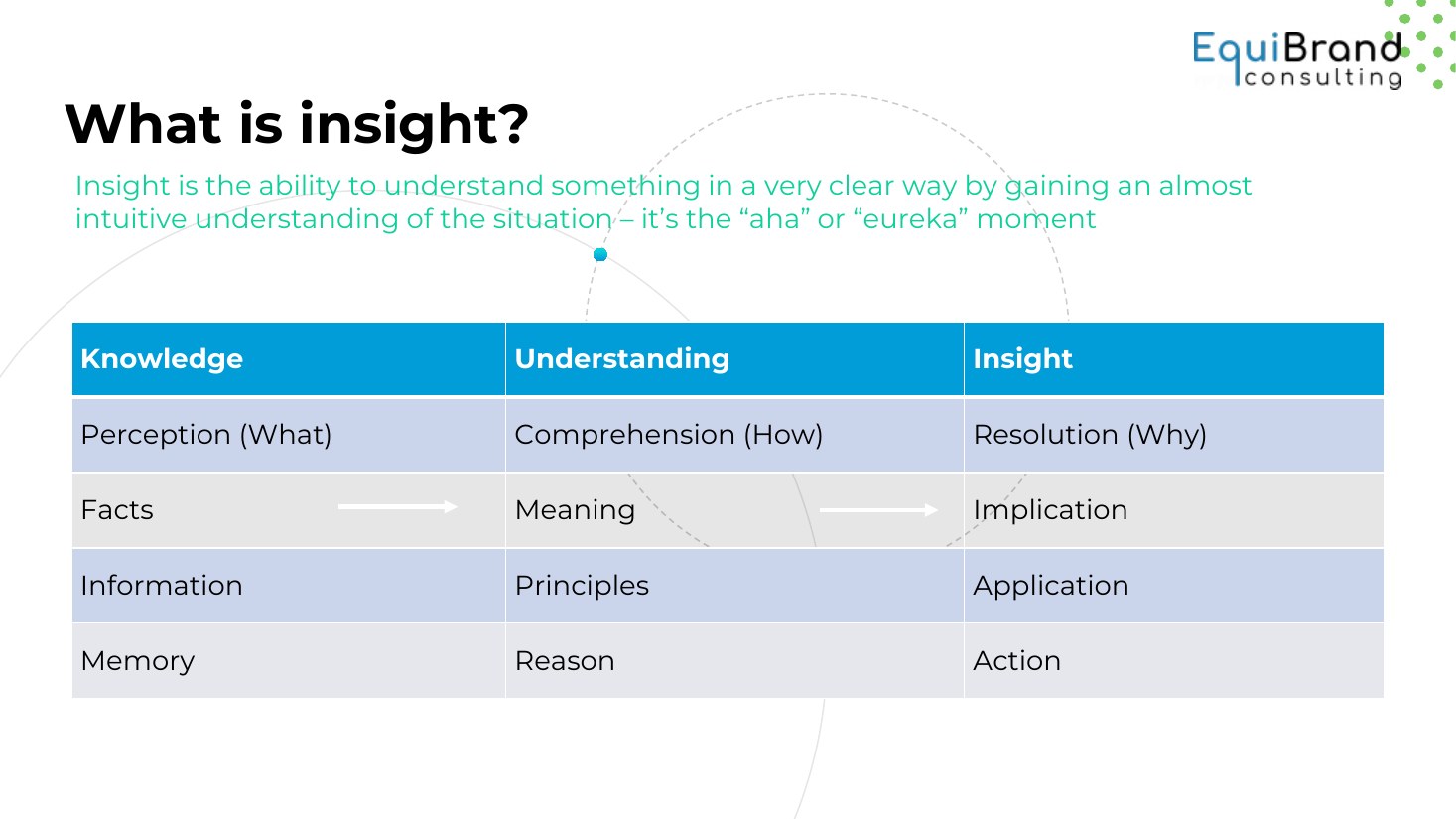
Insight is the ability to understand something very clearly, close to intuitively. It goes beyond knowledge and understanding to uncover the reasons behind behavior and the strategic implications. Knowledge and understanding provide the dots; insight connects them.
The chapter’s shorthand: knowledge is measuring that a desert path is 12.4 miles long. Understanding is packing enough water for the hike. Insight is building a lemonade stand at mile six.
Insight is often overlooked because it doesn’t show up on a balance sheet. Brand strength and innovation can be measured; deep, proprietary understanding sits in the heads and files of leaders and employees. Its value appears only when it is combined with identity and innovation. That is why the book treats it as the first step, alongside defining purpose and growth strategy, and why an outside-in view is needed to counter internal bias.
The three types of insight
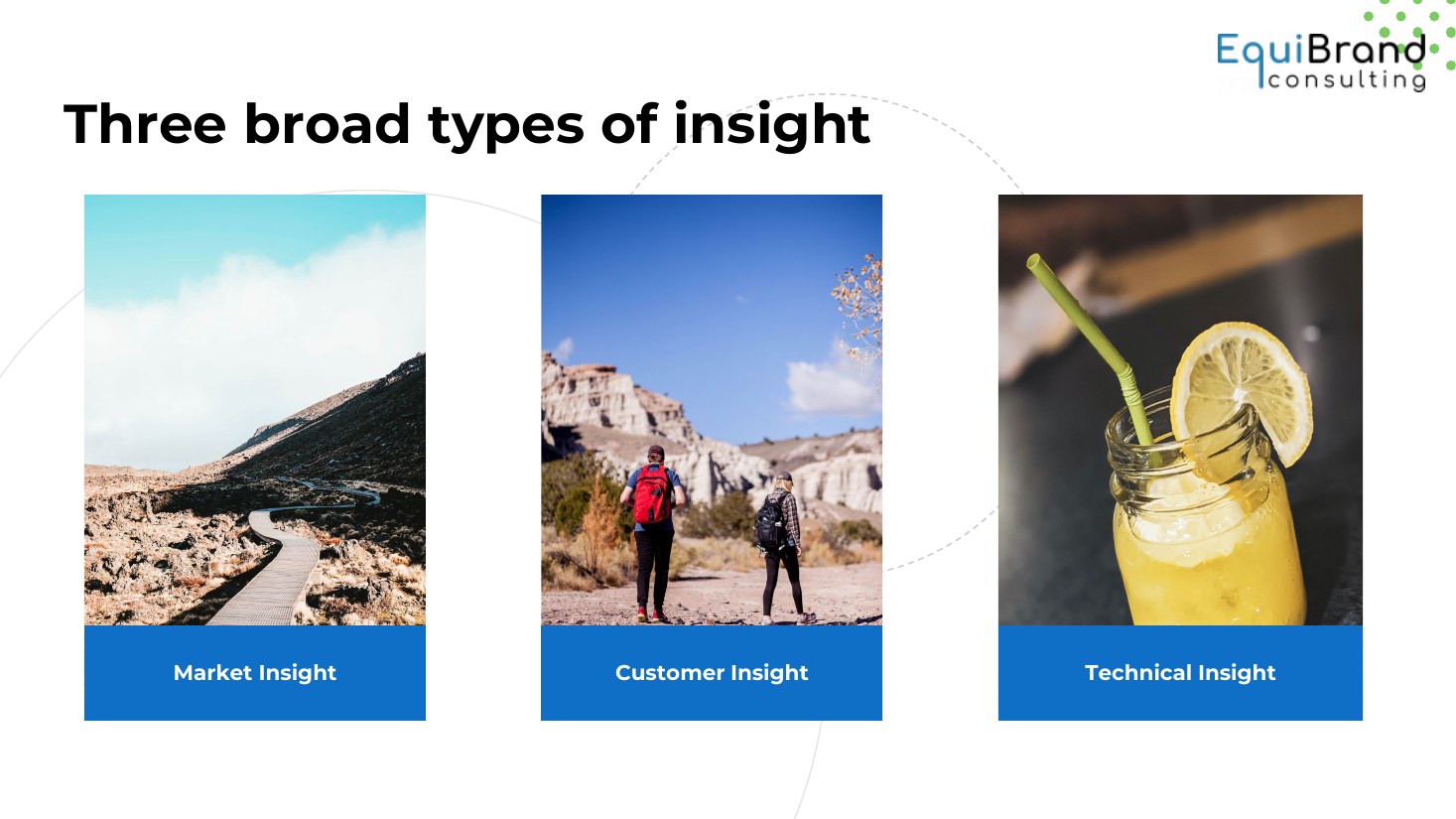
The desert example extends to three types of insight, all of which are needed:
- Customer insight: the wants and needs of end customers. Interview and observe them, or better, immerse yourself in their situation through ethnographic research. Ask why: is the need lemonade, or is it quenching thirst?
- Marketplace insight: situational factors such as competition, trends, and the environment. The chapter points to the shift toward direct-to-consumer marketing and the rise of artificial intelligence as trends that are easy to spot and hard for large organizations to act on.
- Technical insight: the know-how to create solutions in new ways, from materials and logistics to energy and delivery.
The work is to analyze and synthesize all three, then experiment. If the first lemonade recipe is too sweet, test a low-sugar batch.
Look closer, think deeper
Collecting the same customer information in the same way produces the same answers as everyone else. The question EquiBrand asks clients is: What do you know about your important customers that your competitors don’t know? Teams often struggle to list anything. Probing follows: who are your most valuable customers, how is the competitive set defined, and how do we make deep understanding actionable?
A client example shows what deep insight can look like. For a backpack manufacturer looking for new products and brand extensions, researchers ran a “deprivation study”: students gave up their daypacks for a week while researchers followed them through their days. The study revealed the emotional role packs played and the friction points that defined an ideal pack. The company then applied its technical expertise in fabrics and load balancing to design a new line.
Market research is not insight
Many strong marketers are skeptical of traditional research. Steve Jobs, Howard Schultz, and Jeff Bezos all questioned it, while obsessing over customers. The chapter’s explanation: much market research looks through the rearview mirror. It describes what happened and how customers behaved, which does little to reveal growth opportunities.
Insight requires a windshield view: immersion in the customer experience, a focus on the whys, and clarity that leads to action. When a team says, “We didn’t learn anything new,” the better questions are: did you hear anything you’re not currently addressing, and why not?
Turning insight into action: broad to narrow
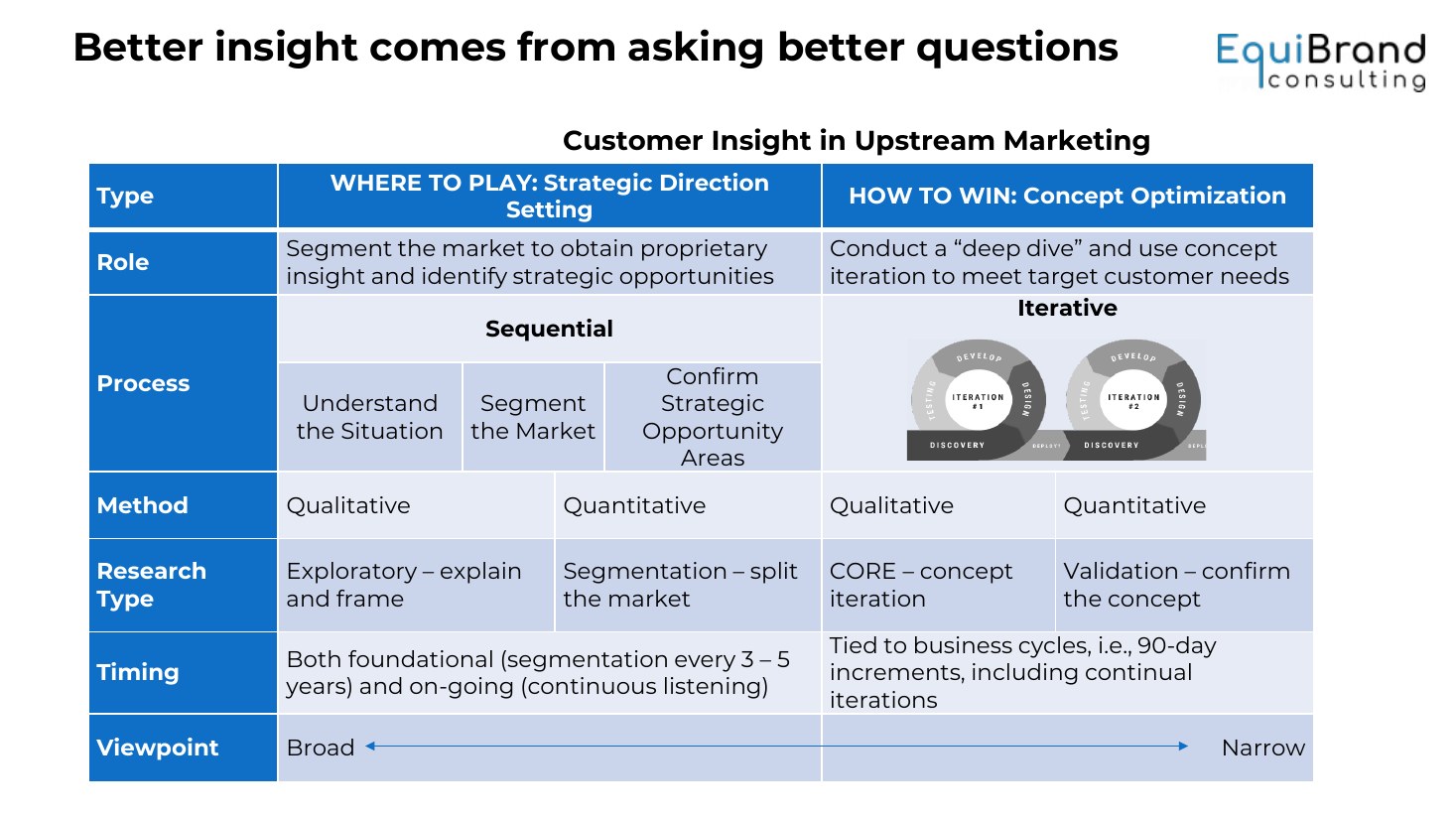
The research method should follow from the question. The chapter distinguishes two kinds of customer insight:
- Where-to-play insight identifies strategic opportunity areas to focus growth, using exploratory research and segmentation (covered in Chapter 3).
- How-to-win insight goes deep on a specific opportunity, using test-and-learn concept iteration to develop business models, value propositions, products, and services.
Four insight-gathering methods build on each other:
- Exploratory insight (qualitative) explains and frames the customer and category: needs, motivations, attitudes, and friction points.
- Segmentation insight (quantitative) splits the market into groups based on attitudes, motivations, and needs.
- CORE insight (Concept Optimization REsearch, qualitative) exposes concepts, mock-ups, and prototypes to customers and iterates them.
- Validation insight (quantitative) confirms what it will take to market the offering, including feature and price trade-offs, as work moves downstream toward launch.
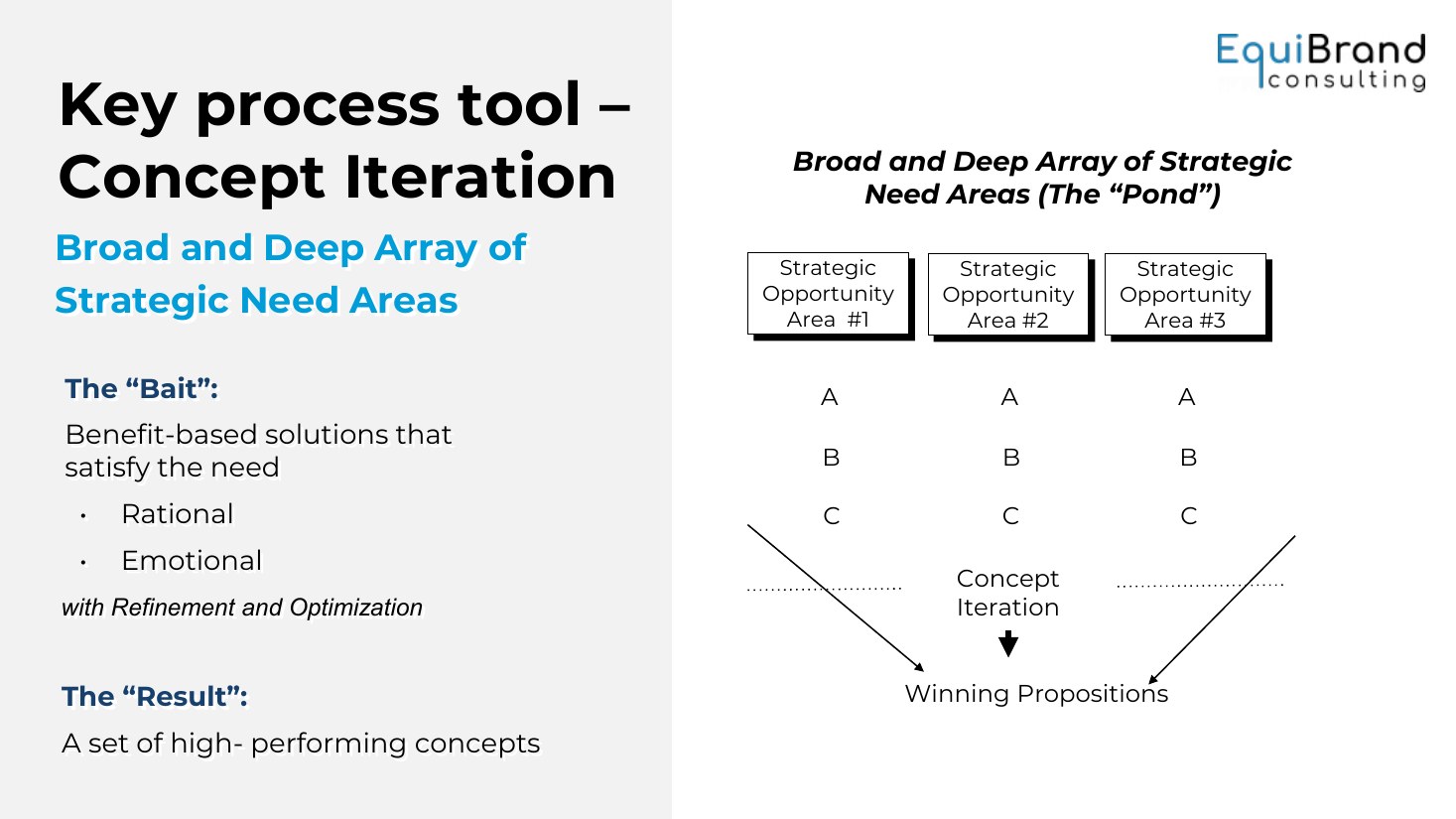
CORE differs from traditional concept development in three ways. It develops a portfolio of ideas across several opportunity areas instead of betting on one. It tests multiple ways to express the same benefit. And it replaces yes/no stage gates with continual refinement. The book’s fishing analogy: choose several ponds, use tangible concepts as bait, and refine until you hook the catch.
Case example: a baking mix brand. A manufacturer of pancake, waffle, and baking mixes had stalled. The work started with internal interviews and a three C’s review (consumers, company, competitors), then a four-part research plan. Exploratory research tested the brand’s “homemade made easy” positioning by asking how consumers define homemade. Segmentation produced four, then five, consumer groups, from from-scratch bakers to mix enthusiasts, reluctant bakers, baking avoiders, and a slightly guilty mix user. Mapping those groups against need states, such as weekday breakfasts versus weekend “big breakfast” occasions, revealed new demand spaces. Concept iteration followed. One finding: asking consumers to add an egg, not just water, made the concept far more appealing to the guilty mix users.
Walt Disney followed the same arc with Disneyland: exploratory visits to parks, a clear target (families, not traditional park-goers), concepts that evolved from early sketches to the final plan, and expert feedback on what would have to be true. Other park operators told him it wouldn’t work. The session only strengthened his conviction: he wasn’t building another amusement park, he was creating the first theme park.
Seven tips for obtaining proprietary insight
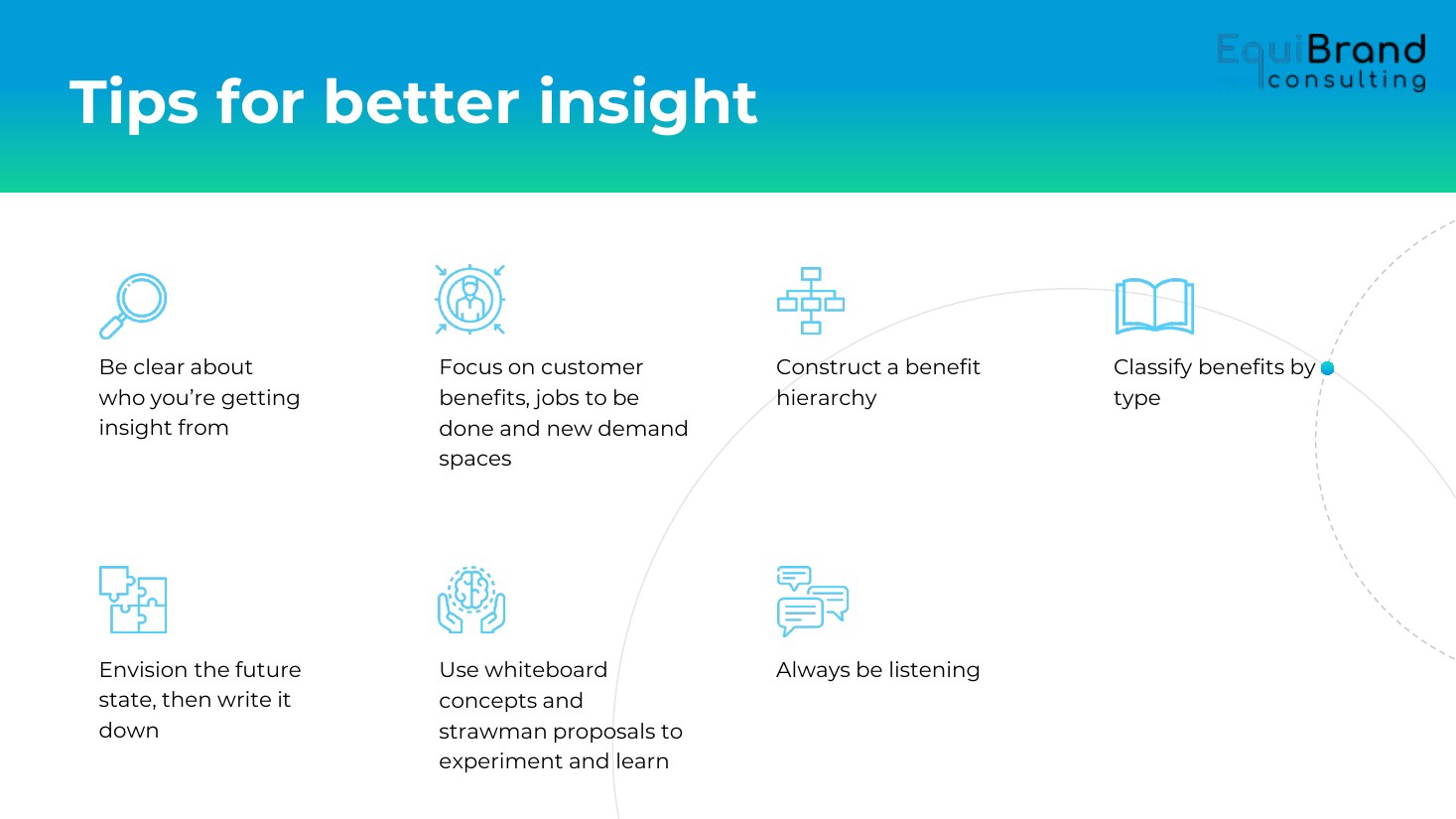
Start every effort by defining what is already known. Some organizations are buried in research; others are starved for it. Gather existing inputs, interview managers, build a fact base and hypotheses, and identify the gaps. Then apply seven tips:
- Be clear about who you’re getting insight from. Broad views give market context; deep dives with power users and “extreme consumers” often give clearer insight. In one case, a microalgae supplement company aiming for the mass market learned from its most involved users, such as endurance athletes and natural-food shoppers, and translated the benefits they sought to mainstream consumers. Talk to non-customers as well as customers.
- Focus on customer benefits, jobs to be done, and new demand spaces, not product attributes. Theodore Levitt’s line applies: people don’t want a quarter-inch drill; they want a quarter-inch hole. The recording industry shows the cost of attribute focus: consumers wanted convenient access to music and didn’t care about the format. Apple launched the iPod as “1,000 songs in your pocket,” selling the hole, not the drill.
- Construct a benefit hierarchy. Ladder up from functional attributes to rational benefits, emotional benefits, and self-expressive benefits by asking why three times. The result shows, on one page, where value can be created.
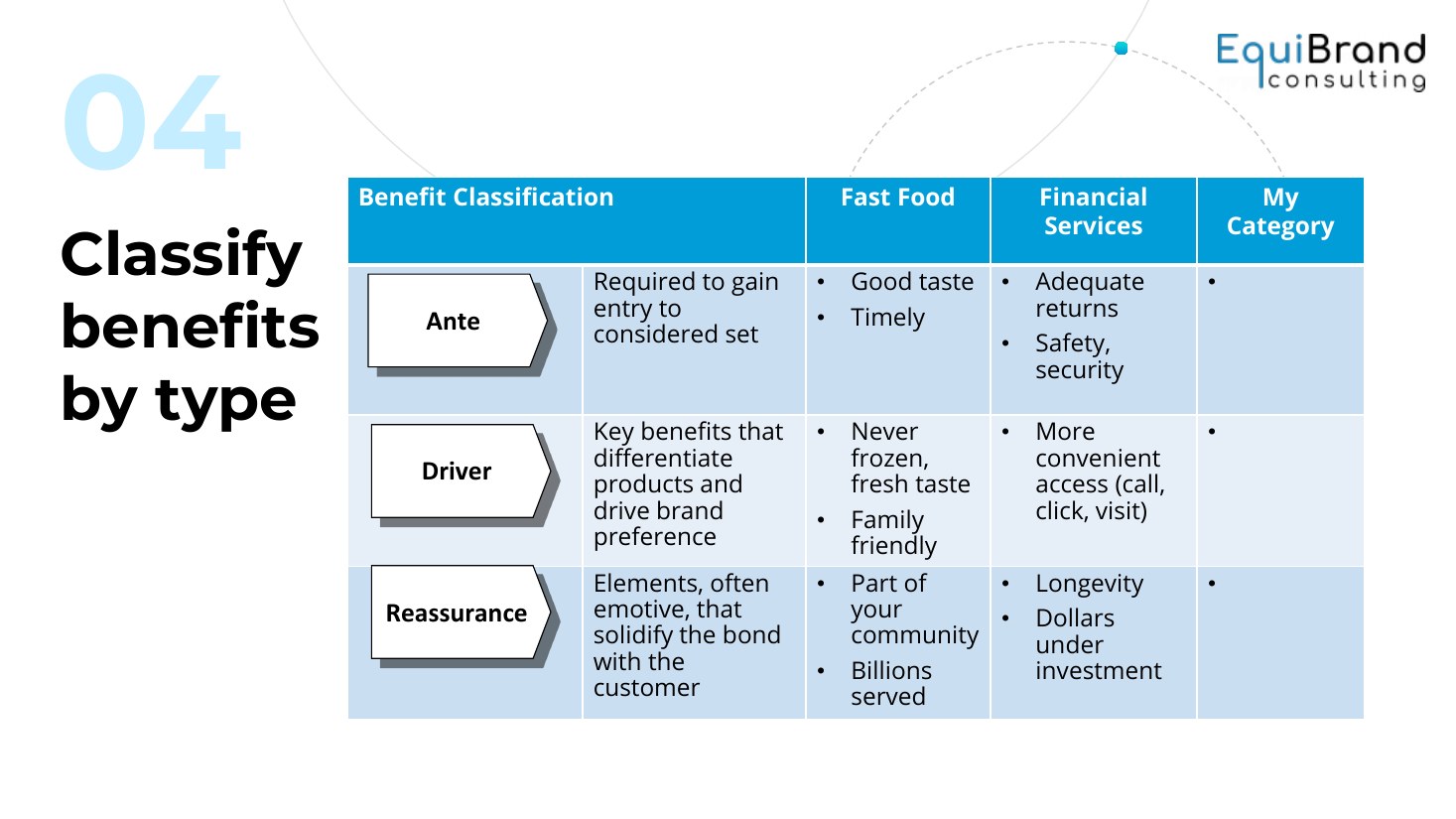
- Classify benefits by type. Ante benefits are table stakes, driver benefits create differentiation and purchase, and reassurance benefits build emotional connection, usually best delivered implicitly.
- Envision the future state, then write it down. The “Wall Street Journal exercise” asks teams to write the headline and opening paragraph of an article about the organization five years out. Like Amazon’s six-page memos, writing forces clear thinking.
- Use whiteboard concepts and strawman proposals to experiment and learn. Whiteboard concepts express ideas in the customer’s voice for feedback; strawman proposals are internal drafts built to be knocked down and rebuilt.
- Establish an insights engine and always be listening. Nike involves athletes and scientists in product development, Starbucks crowdsources ideas, Disney prototypes with emerging technology, Google learns continuously from users, and Amazon tracks the customer experience in real time.
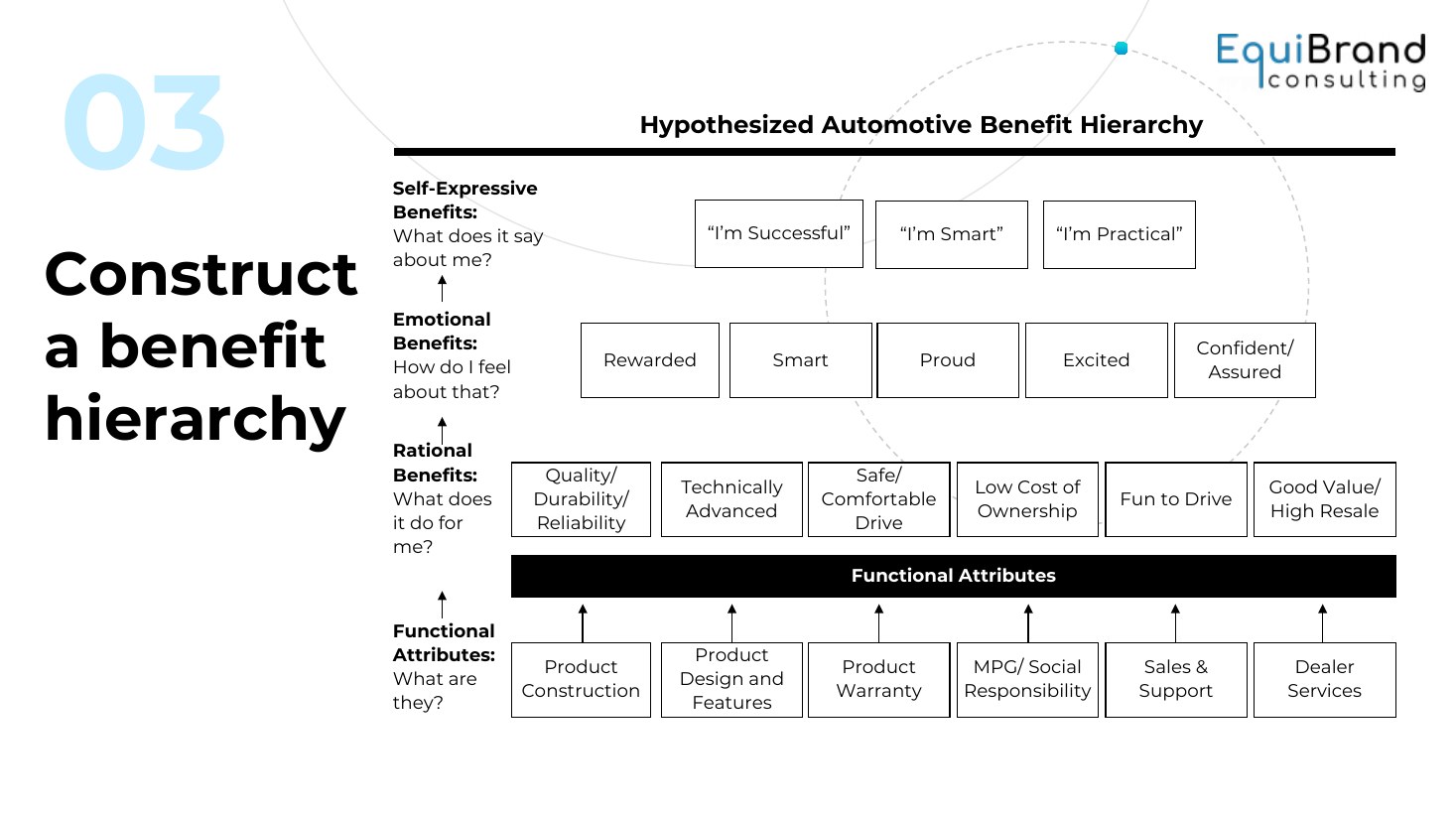
One caution on benefit hierarchies: higher-order emotional benefits are useful to understand, but they may be too far removed to guide identity or innovation. In a medical device example, cardiac surgeons rarely spoke about patient safety, because it implied something might be unsafe; they talked about ease of use and inferred safety. That finding shaped the launch positioning.
The chapter also introduces situation-complication-resolution (SCR), the problem-solving structure EquiBrand uses to frame issues and present findings.
Key takeaway
Insight has to clear a high bar: it must be deep, proprietary, forward-looking, and actionable. Maniacal focus on the end customer creates an outside-in view, which leads to internal clarity and customer-centricity. Chapter 3 builds on it with a customer framework that defines to whom and for what, and the strategic growth areas that follow.
Questions to consider
- What do you know about your important customers that your competitors don’t know?
- Have you structured insight gathering to answer where-to-play and how-to-win questions?
- How would you define the benefit hierarchy for your category?
- Are you using concept iteration to get people on the same page strategically?
Put this chapter to work
- Customer insights consulting: Customer Insights & Analytics
- Brand research: Brand Research
- Next step for leadership teams: Start the Growth Assessment
- Related reading: How to Turn Customer Insight Into Customer Action
Frequently asked questions
What is customer insight?
Customer insight is a clear, almost intuitive understanding of why customers behave as they do and what that means for the business. It goes beyond facts (knowledge) and meaning (understanding) to implications and action.
What are the three types of insight?
Customer insight (end-customer needs and wants), marketplace insight (competition, trends, and environment), and technical insight (the know-how to create new solutions). Growth comes from combining all three.
What is a benefit hierarchy?
A one-page map that ladders up from a product’s functional attributes to rational, emotional, and self-expressive benefits by repeatedly asking why. It shows where value can be created and which benefits to emphasize.
Is market research the same as insight?
No. Market research can lead to insight, but much of it describes past behavior. Insight focuses on the whys, looks forward, and leads to action.
Get all nine chapters
Want the whole framework? Enter your name and email and we’ll send you all nine chapters of Upstream Marketing, each with its slide deck, in one email.
"*" indicates required fields
← Chapter 1: Upstream Marketing, An Overview | All chapters | Chapter 3: Define Your Purpose, To Whom? For What? →





Follow EquiBrand