
Chapter 5: Build and Extend the Brand
From Upstream Marketing: Unlock Growth Using the Combined Principles of Insight, Identity, and Innovation by Tim Koelzer and Kristin Kurth (Greenleaf Book Group Press, 2021)
Chapter summary. Chapter 5 is the second best practice of the identity principle. It argues that the strongest, most enduring brands are built upstream, through the disciplined alignment of brand strategy with customer requirements, not through advertising alone. The chapter defines what a brand is and why it is worth investing in, shows how to migrate a brand from its current image to a future vision, and lays out the four keys to brand management: brand positioning, the brand-customer experience, brand architecture, and brand extension. It closes by showing why identity needs innovation to reach its full potential.
Download the full chapter (PDF) | Download the chapter slides (PDF) | Get all nine chapters
Creating a brand from scratch: BioCrossroads
The chapter opens with a place brand. Think of Napa Valley and you think of wine; Hollywood, film; Silicon Valley, technology. Central Indiana had the assets of a life sciences hub, including global health care companies, Indiana University and Purdue, and an affordable, livable region, but its image didn’t match. Recent graduates were leaving for the coasts, unaware that much of what they wanted was already at home.
Community leaders formed the Central Indianapolis Life Sciences Initiative and brought in EquiBrand. The first assessment found plenty of assets but nothing to organize them: the frame, seat, handlebars, chain, and tires, but no bicycle. A benefit hierarchy identified what the brand could stand on. The team chose the entrepreneurial community as the bull’s-eye target, a controversial call at the time, because a clear target would bring clarity and consistency. A dozen or so verbal concepts were developed and tested with civic, academic, and industry leaders, students, recent graduates, and startup executives using the CORE method. The winning concept became BioCrossroads, followed by the name, identity, website, and launch plan.
The book reports that Indiana moved from the bottom quartile to one of the top states for life sciences, with over $250 million secured in new capital formation and numerous industry, government, and university partnerships. It also reports that in 2020 life sciences contributed over $75 billion in economic value to Indiana, with more than 2,100 life sciences businesses in the state and BioCrossroads helping create the Indiana Biosciences Research Institute and the 16 Tech innovation district. It is the chapter’s model for building a brand from scratch: obtain customer insight, iterate value proposition concepts, and establish a strong positioning as the platform for downstream work.
The strongest brands are built upstream
Try to recall a favorite Starbucks commercial, an Amazon magazine ad, or a Google promotion. It isn’t easy, because the profile companies build their brands upstream and do comparatively little downstream marketing. Howard Schultz described Starbucks as a company that spends more on training its people than on advertising, and warned that authentic brands don’t come from marketing cubicles or agencies; they come from everything the company does. Jeff Bezos put it this way: “Your brand is what people say about you when you’re not in the room.” When Southwest rebranded, its message was what didn’t change: a new look, the same heart.
What is a brand?
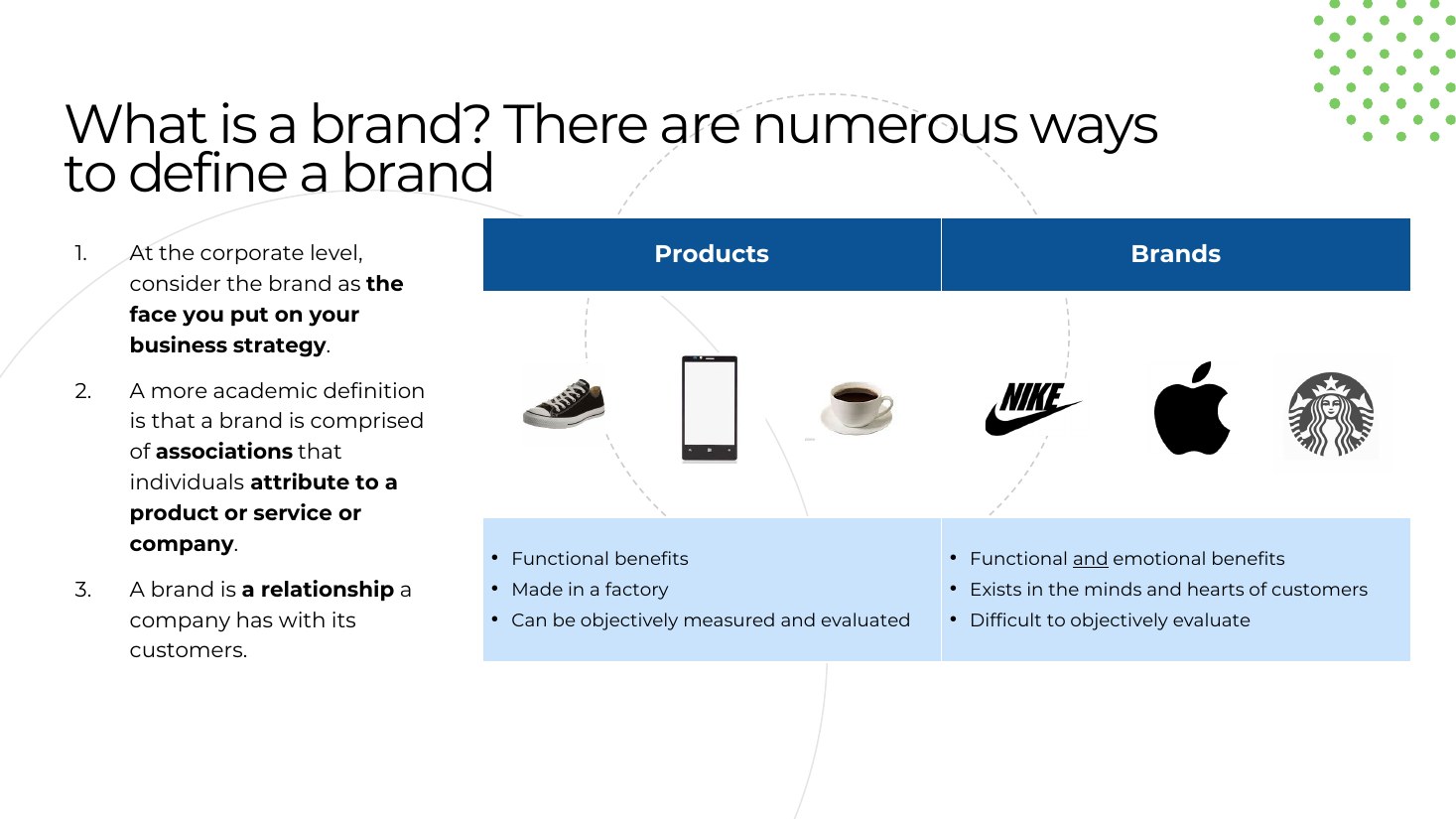
The chapter offers three definitions. At the corporate level, a brand is the face you put on your business strategy: if vision is the eyes and mission the heart, the brand is how you express them to customers, employees, and investors. Academically, a brand is the set of associations people attach to a product, service, or company. And a brand is a relationship a company has with its customers. A product is made in a factory and can be objectively measured; a brand exists in customers’ minds and adds equity beyond the product.
The book’s illustration is the fiddle and the violin. Picture a fiddler and the crowd, then a violinist and the audience. The images differ completely, yet it is the same instrument. Brand imagery aligns with the target customer, shapes perception, creates differentiation, and extracts value. A brand is also not a name, logo, or tagline, though those tangible things can represent it.
Why invest in brand building?
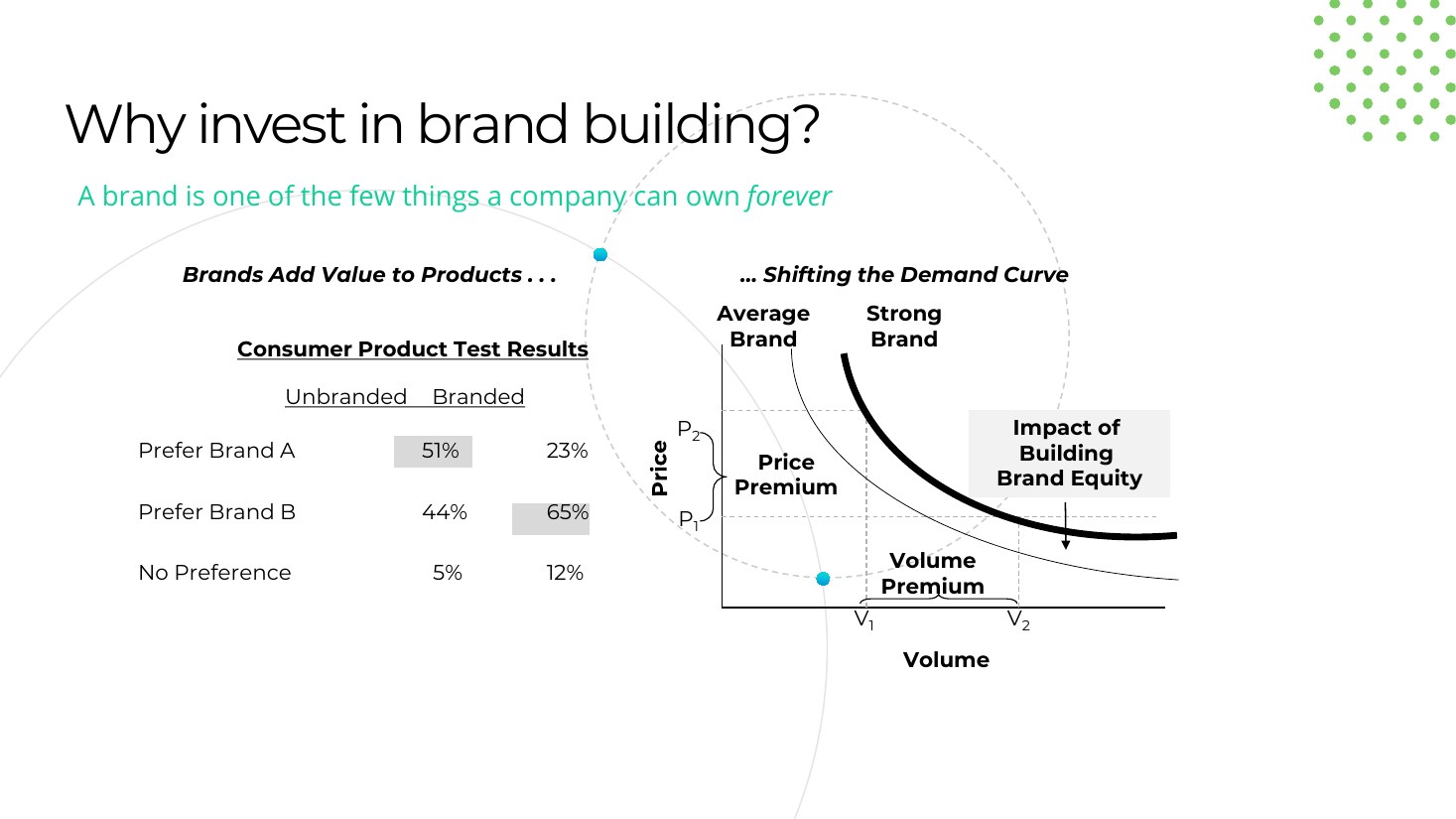
A strong brand generates superior profits by raising both price and volume potential. In the book’s soft drink example, one cola lost a blind taste test but won once the brands were shown. Brands let an organization differentiate beyond commoditization, add credibility to new product introductions, increase the return on marketing dollars through an umbrella brand, and attract investors and employees. For customers, brands provide choice, simplify decisions, assure quality, and reduce risk. Internally, they guide where to allocate resources.
Equity can also be negative. In one mini case, consumers test-drove an unbadged vehicle and expected to pay about $25,000. A control group drove the same car with the client’s brand visible, and the expected price dropped to $22,250. Decades-old quality concerns were costing the brand about 10 percent of its value.
Brand migration
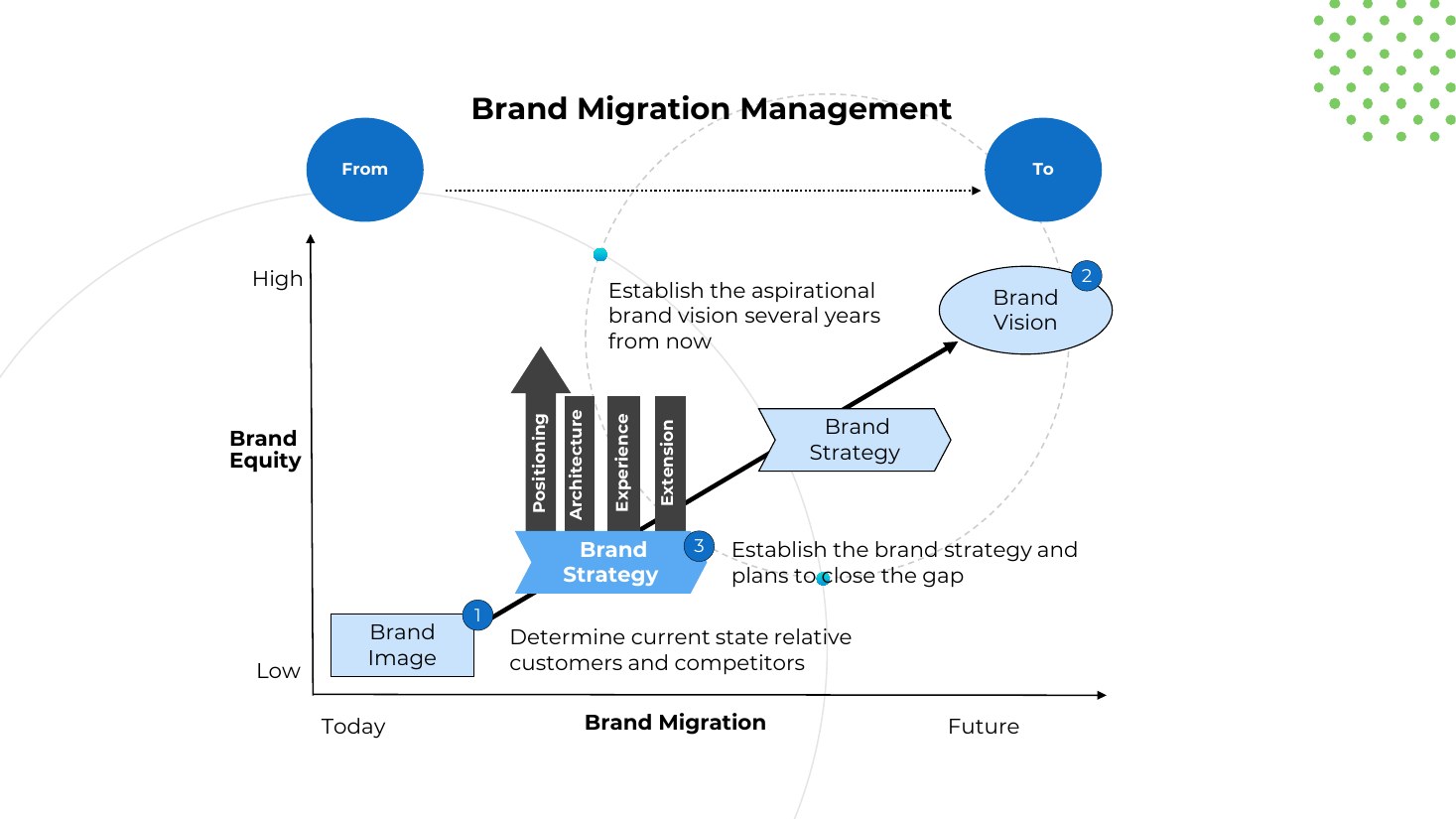
Most brands already exist in customers’ minds, so the work is usually migration rather than creation. The chapter uses three points in time:
- Current brand image: how customers see the brand today versus competitors, determined through a brand audit.
- Desired future state: what the brand aspires to be several years from now, including new associations it needs to take on.
- The gap: the role of brand strategy is closing the distance between the two, using the four keys below.
The four keys to brand management
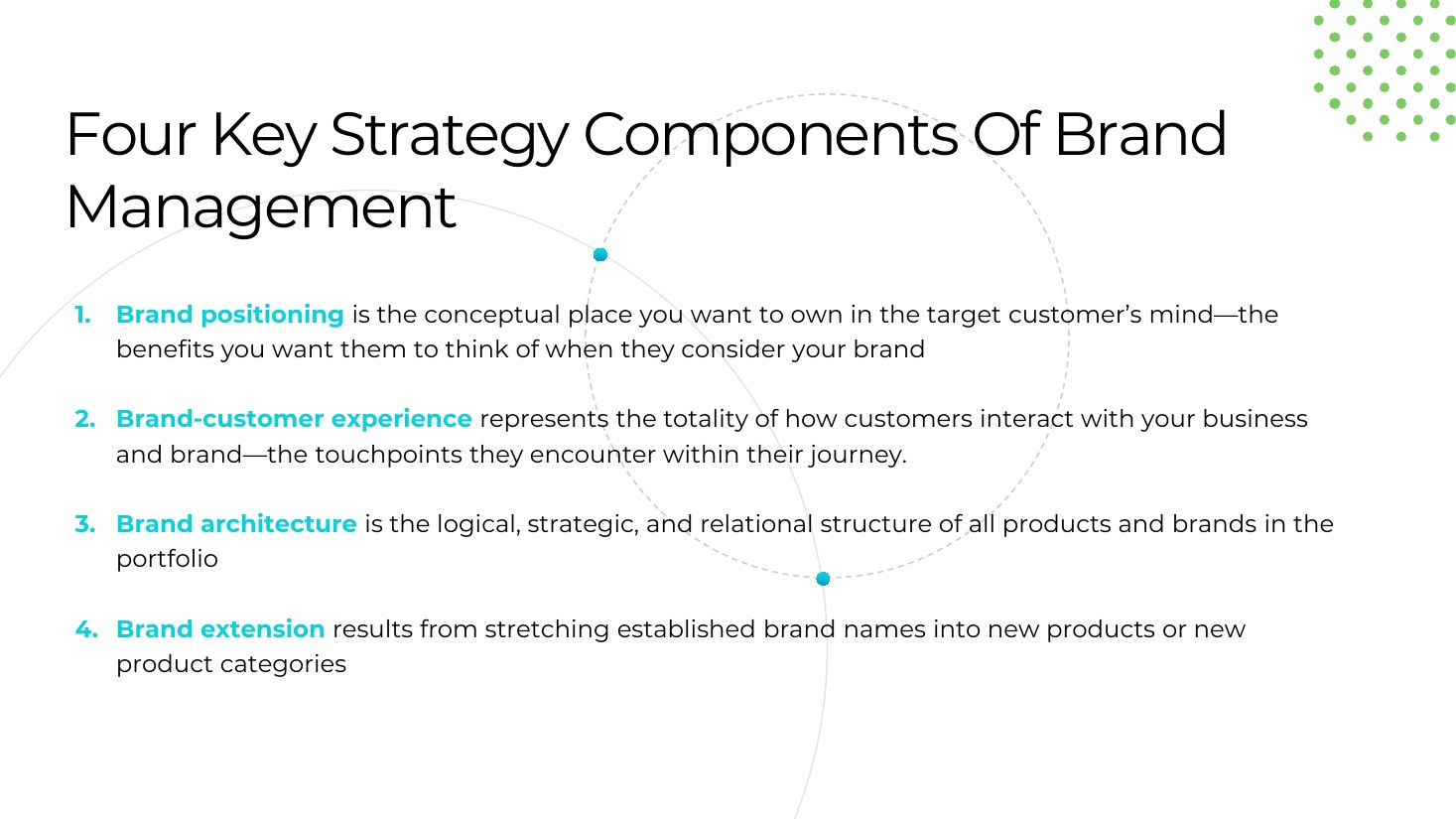
- Brand positioning: the conceptual place you want to own in the target customer’s mind.
- Brand-customer experience: the totality of how customers interact with your business and brand across their journey.
- Brand architecture: the logical, strategic, and relational structure of all products and brands in the portfolio.
- Brand extension: stretching established brand names into new products or categories.
1. Brand positioning
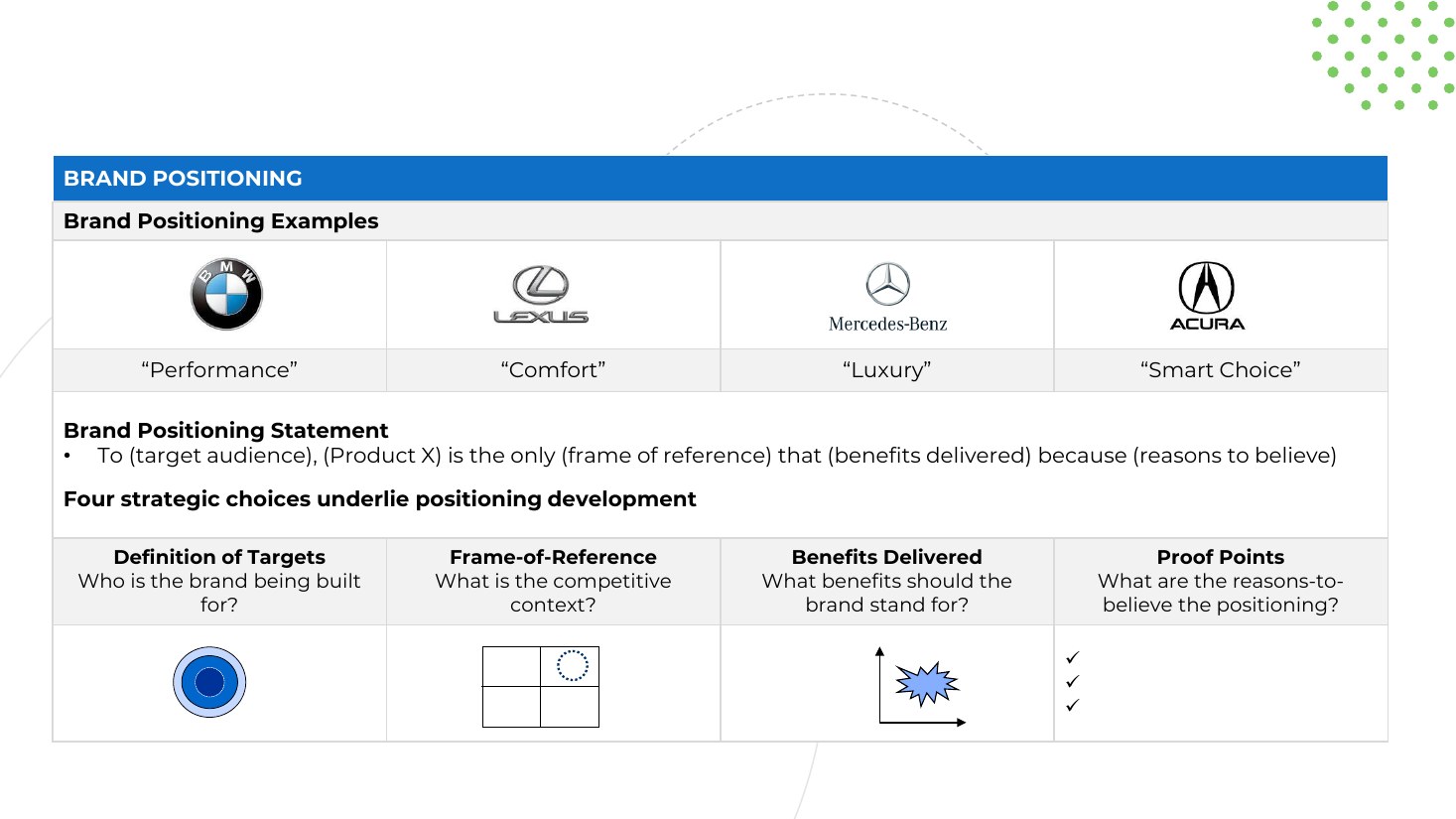
At the core of the most valuable brands is a clear, succinct positioning, an internal statement that guides decisions and external associations. The chapter’s template:
To (target audience), Brand X is the only (category or frame of reference) that gives you (points of differentiation or benefits delivered) because (reasons to believe).
Positioning is the art of sacrifice, with choices across four elements: who the brand is for, the competitive context, the benefits it stands for, and the proof points. A winning positioning meets the same tests as a value proposition: relevant, differentiated, and credible. Relevant but undifferentiated brands risk commoditization; differentiated but irrelevant ones become niche players.
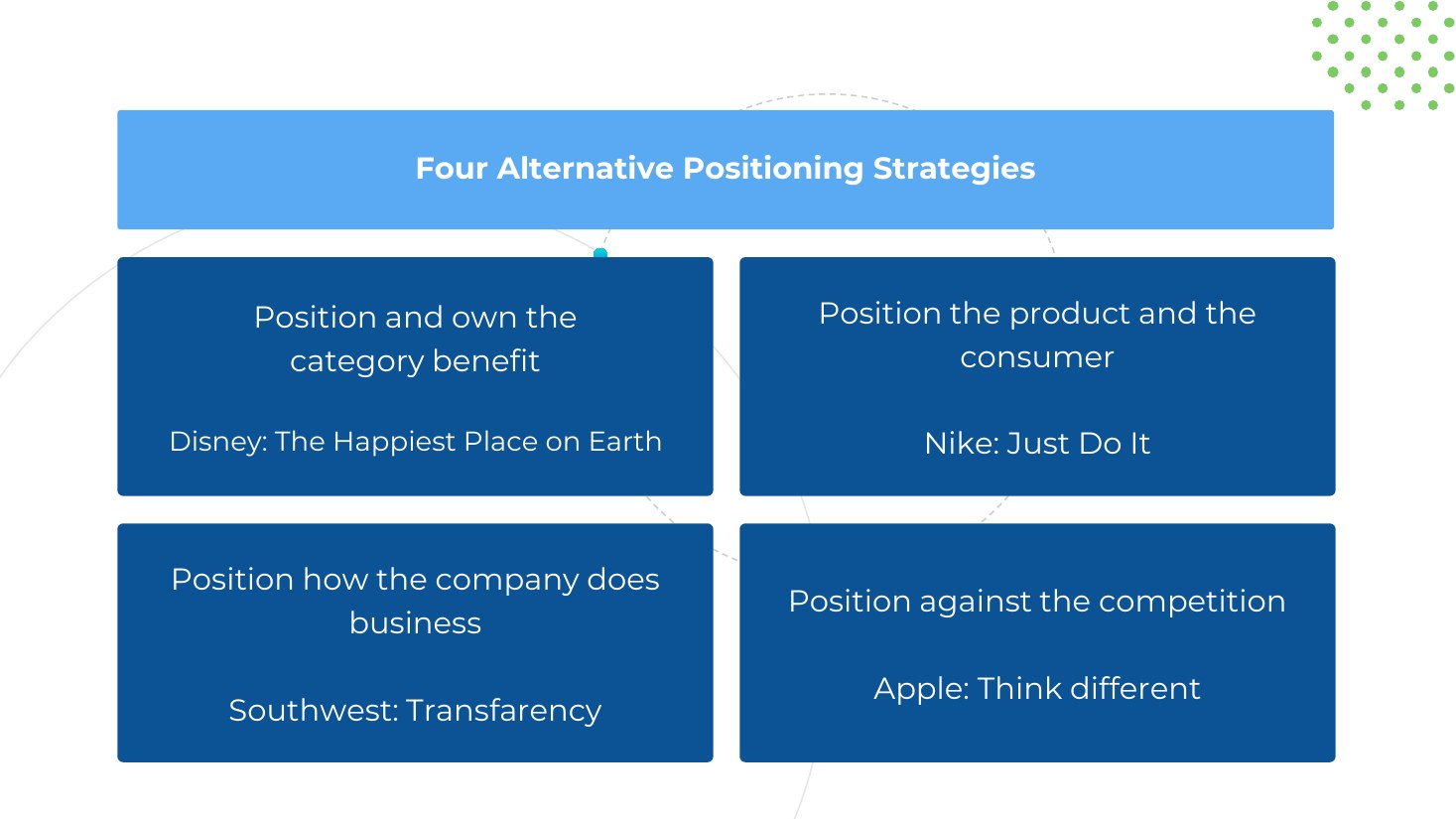
The profile companies illustrate four ways to position:
- Own the category benefit: Disney, “The Happiest Place on Earth.”
- Position how the company does business: Southwest’s “Transfarency.”
- Position the product and the consumer: Nike’s “Just Do It,” which taps the consumer’s aspiration rather than the shoe.
- Position against the competition: Apple’s “Think Different.”
Three cautions follow. Position on a single idea, though not necessarily a single benefit. Don’t confuse positioning with a tagline, which is an outgrowth of it. And let positioning endure while still evolving with the market. The chapter also separates verbal branding (positioning, story, messaging, keywords) from visual branding (logo, imagery, design), then brings both together in a one- to two-page brand development brief that directs downstream partners. In an era of content and search, the book argues, clear positioning matters more, not less.
2. Brand-customer experience
One of EquiBrand’s first clients, a cardiac device maker formed through acquisitions, had an agency proposing a direct-to-consumer launch with an emotional video and roughly $10 million in mass media. EquiBrand asked how the products were purchased and mapped the journey from diagnosis to post-procedure. The recommendation: “Save the $9,900,000.” Physicians and hospital buying committees made the decision; patients had no bearing on brand choice. The money went instead to touchpoints that reached physicians where they were receptive, plus a modest patient education program. (For how EquiBrand applies this thinking in medtech today, see the medical device brand integration guide.)
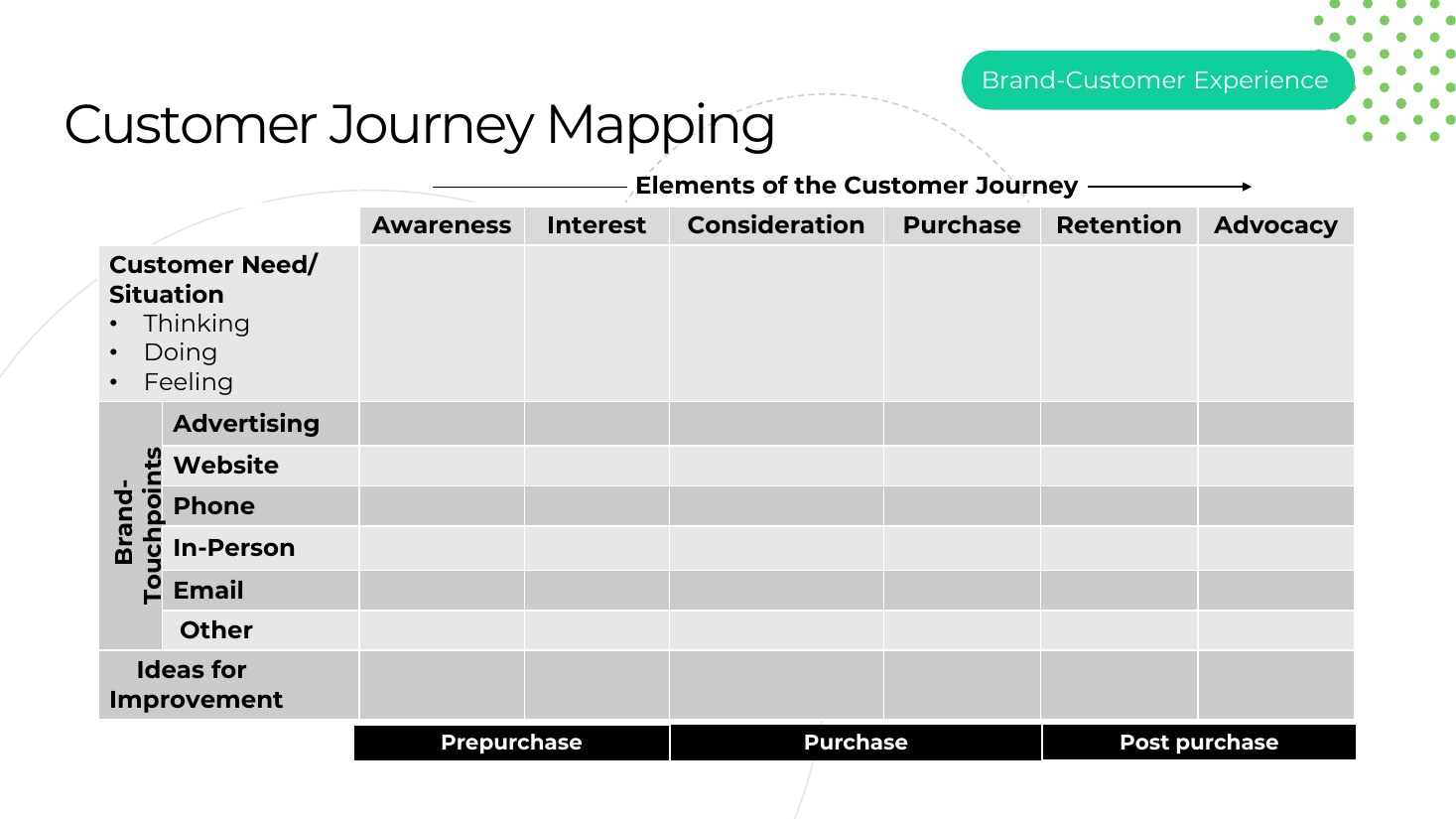
The chapter’s process for creating the experience:
- Understand the “as is” journey. Map pre-purchase, purchase, and post-purchase, including what customers are thinking, doing, and feeling, and use conversion metrics to find leverage points.
- Create the ideal “to be” experience. Brainstorm the winning experience at each touchpoint and remove friction. Go beyond fast and easy: Starbucks engages all five senses in a single visit.
- Align brand touchpoints. Integrate channels, media, and messaging with customer requirements, looking for the 80 percent improvement that takes 20 percent of the investment.
3. Brand architecture
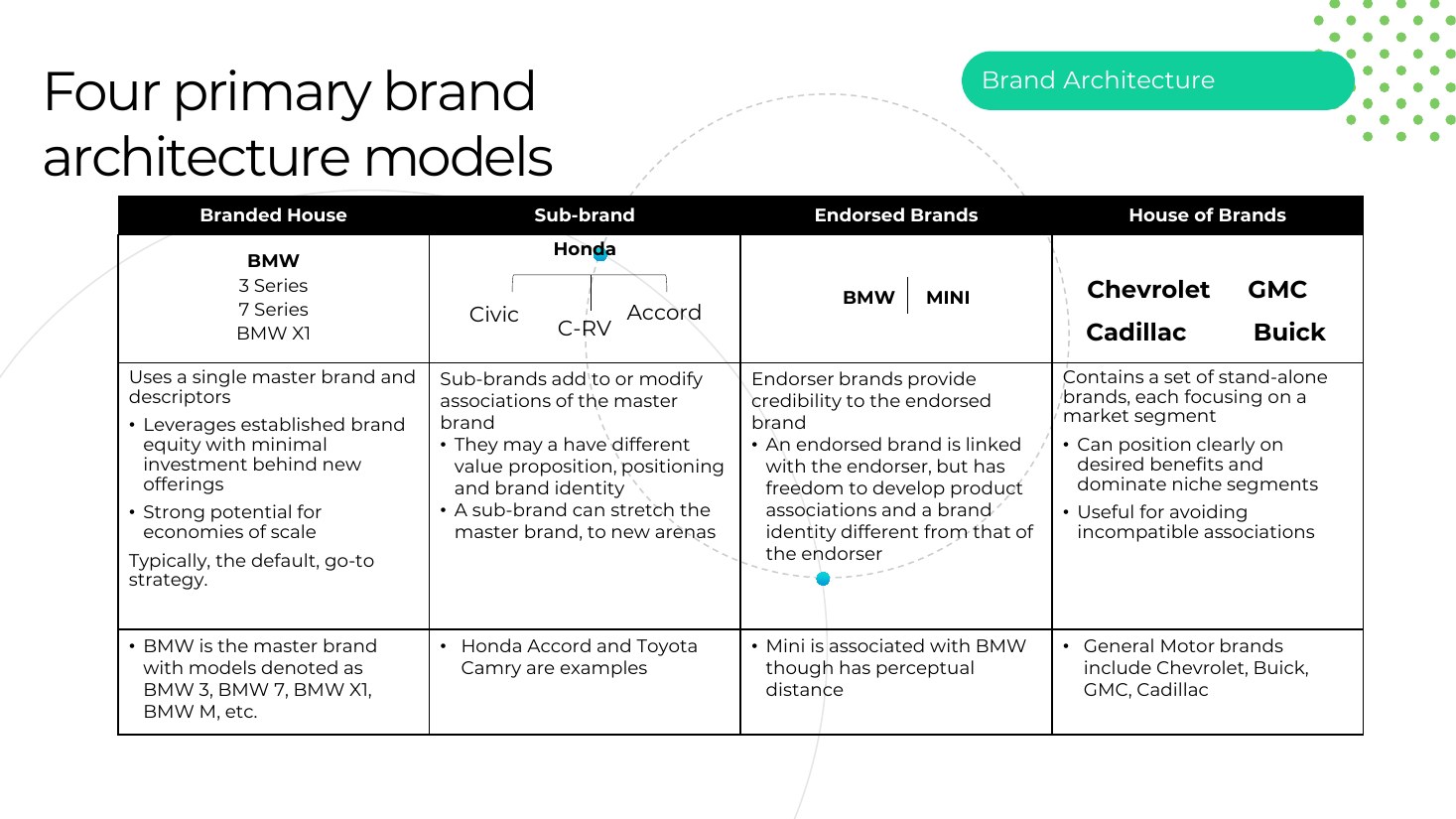
Brand architecture recognizes that customers relate to brands at different levels, from corporate brand to product brand to descriptor. Its three goals are clarity, synergy, and leverage, and Apple is the book’s example: Apple carries the emotional benefits, product brands carry rational ones, and each adds value to the other. The four models run from a branded house to sub-brands, endorsed brands, and a house of brands, and most companies use a hybrid.
The trend is toward a branded house: invest in the fewest brands needed to meet business goals, and name rather than brand individual offerings (Google Maps, Google Drive). Where a portfolio makes sense, give each brand a clear role, as Amazon does with Prime, Kindle, Echo, and its value-tier brands. Nobody sets out to build a confusing architecture; it creeps in through acquisitions and launches, leaving “empty vessel” brands. The chapter’s five steps run from business strategy inputs and an inventory of the current architecture to research, alternative structures, and documented principles and naming. For more, see brand architecture and portfolio structure and brand portfolio management.
4. Brand extension
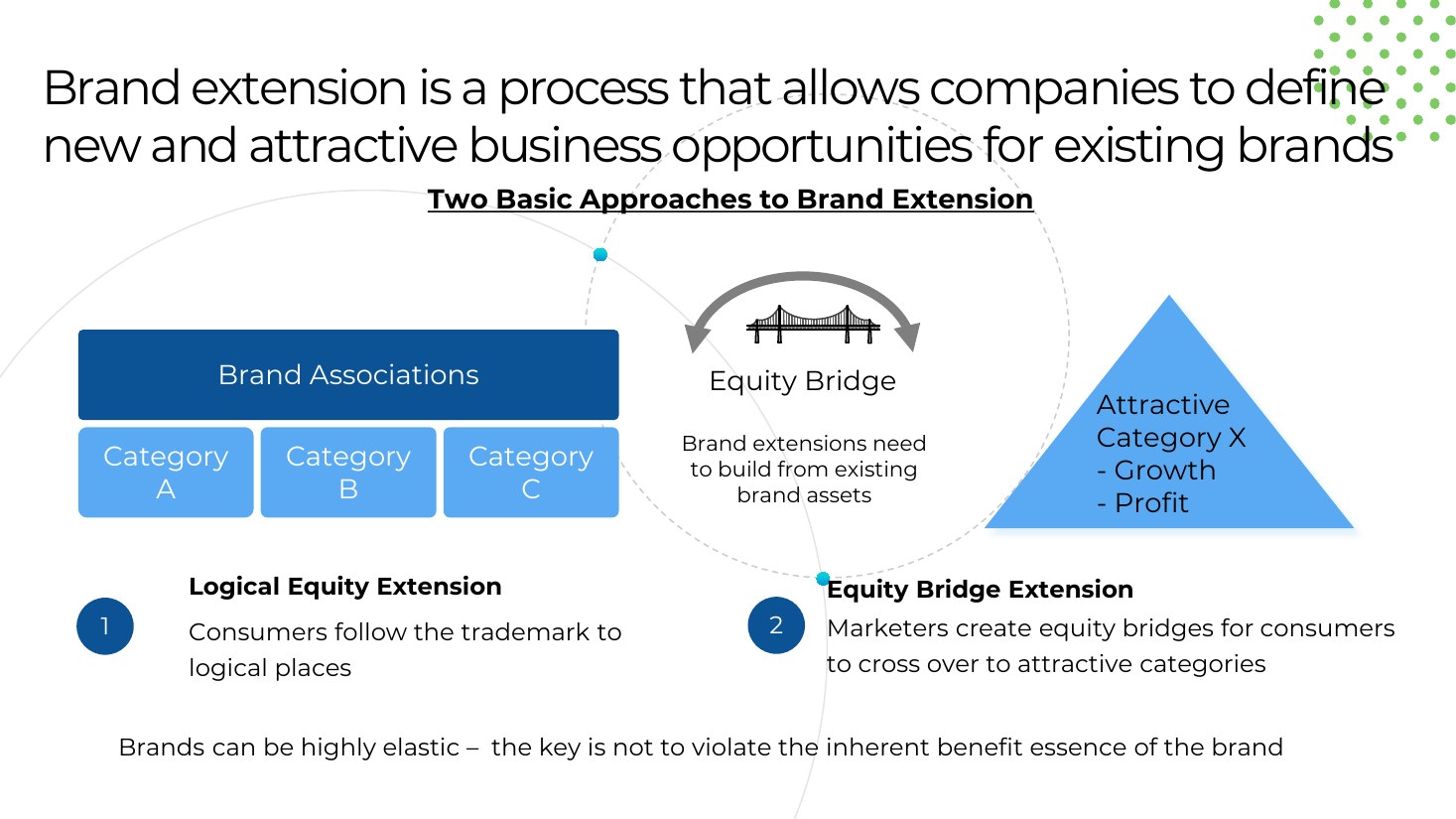
Brand extension is the bridge from identity to innovation. Stretching an existing brand into a new category increases the chance of success and lowers the cost, with immediate awareness, faster trial, and distribution leverage. Starbucks’ Frappuccino brought in non-coffee drinkers and filled stores in the afternoon and in warm weather.
There are two approaches. In a logical extension, consumers follow the brand to related categories, as a runner in Nike shoes considers Nike tennis shoes. In an equity bridge extension, marketers build a bridge to a further-out category, as Nike did in golf with Tiger Woods. The second takes more focus but offers a larger payoff. The process: inventory brand associations, brainstorm and size new categories, screen ideas on brand fit and unmet category needs, refine them with CORE, and build an entry plan. Brands can be stretched too far; Starbucks’ Evening program and Nike binders at the drugstore are the book’s warnings. Just because you can extend a brand doesn’t mean you should.
Moving from identity to innovation
In the mid-1990s, a cookie and cracker client rejected the idea of a healthy nutrition bar: the brand didn’t fit healthy eating, and the energy bar category was only about $100 million. Both points were true. But the client saw things as they were, not as they could be. The book reports that the category has since grown more than twentyfold and gone mainstream. Insight and identity are critical, but they aren’t enough on their own. Combined with innovation, the subject of Chapter 6, they produce the full effect of upstream marketing.
Key takeaway
If you’re not intentional about positioning your brand, somebody else will be, usually a competitor. Manage the brand proactively through the four keys: establish the positioning, align the brand-customer experience, construct the architecture, and selectively extend the brand.
Questions to consider
- Is brand strategy a senior-level, boardroom topic in your organization?
- Have you clearly established a relevant and differentiated brand positioning?
- Are you making it easy for customers to buy from you, including aligning brand touchpoints with the customer decision process?
- Do your brands and products fit together in a way that makes it clear to customers what you offer?
Put this chapter to work
- Where your brand stands today: Brand audit
- Structuring a portfolio: Brand architecture and portfolio structure
- Testing positioning concepts: Concept optimization (CORE)
- Brands after an acquisition: M&A brand integration
- Next step for leadership teams: Start the Growth Assessment
Frequently asked questions
What are the four keys to brand management?
Brand positioning, the brand-customer experience, brand architecture, and brand extension. Together they close the gap between a brand’s current image and its future vision.
What is a brand positioning statement?
An internal statement of the place a brand wants to own in the target customer’s mind: to (target audience), Brand X is the only (frame of reference) that gives you (benefits delivered) because (reasons to believe). It should be relevant, differentiated, and credible.
What are the four brand architecture models?
Branded house, sub-brand, endorsed brand, and house of brands. Most companies use a hybrid, and the trend is toward a strong master brand with descriptive names for individual offerings.
What is the difference between a logical brand extension and an equity bridge?
In a logical extension, customers naturally follow the brand into related categories. In an equity bridge extension, the company builds a bridge, such as an endorsement or shared benefit, into a further-out category. Bridges take more effort but can offer a bigger payoff.
Get all nine chapters
Want the whole framework? Enter your name and email and we’ll send you all nine chapters of Upstream Marketing, each with its slide deck, in one email.
"*" indicates required fields
← Chapter 4: Design and Align Value Propositions | All chapters | Chapter 6: Create, Test, and Learn →





Follow EquiBrand